
Call us now :08045800460
 Send Inquiry
 Send Inquiry
Coagulation Flocculation Settling Pilot Plant
Coagulation Flocculation Settling Pilot Plant Specification
- Power Source
- Electric
- Capacity
- 15-20 L/hr
- Temperature Range
- Ambient to 80C
- Automation Grade
- Semi Automatic
- Accuracy
- High
- Measurement Range
- Turbidity 0-1000 NTU
- Frequency
- 50 Hz
- Model No
- CFS-15P
- Voltage
- 220 V
- Core Components
- Coagulation Chamber, Flocculation Chamber, Settling Tank, Pump, Stirrer
- Feature
- Transparent Chambers, Adjustable Mixing Speed, Easy Sampling
- Equipment Materials
- Stainless Steel, Glass, PVC
- Type
- Pilot Plant
- Usage
- Laboratory & Research
- Display Type
- Digital/Analog
- Dimension (L*W*H)
- 1200 mm x 550 mm x 1250 mm
- Weight
- 62 kg
- Safety Features
- Overload Protection, Non-return valves, splash guards
- Jar Test Provision
- Yes, standard jar test facility
- Mixing Time Controller
- Digital / Manual Timer
- Installation
- Table-top / Movable Design
- Stirrer Type
- Variable Speed, Paddle and Propeller Mixers
- Operational Pressure
- Atmospheric
- Pump Type
- Peristaltic / Submersible Dosing Pump
- No. of Flocculation Chambers
- 3 to 4 (in series, transparent and individual control)
- Sample Collection Port
- Yes, At Each Stage
- Settling Tank Volume
- 7-10 liters (approx.)
- Application
- Academic research, industrial pilot trials, laboratory simulation of coagulation-flocculation-settling
About Coagulation Flocculation Settling Pilot Plant
Introduction
Coagulation- flocculation - settling processes are generally used to separate colloidsfrom water, as in this case natural settling speed is too slow to obtain asufficient clarification. This plant enables to study the coagulation,flocculation and settling processes separately or simultaneously and it mainly consistsof a stirred feed tank, of two tanks for flocculent and coagulant, of a stirredcoagulation tank, of a stirred flocculation tank and of a plate settler.
Processcontrol, data acquisition and supervision are automatically carried out by a microprocessorcontroller and by a specific control and supervision software that enables the remote control of variousoperational parameters.
Experimentation/Learning Objects
The processunit enables to develop and analyze the following issues:
Coagulation
Flocculation
Co-currentand counter-current settling
Characteristicsof coagulant and of flocculants
Optimizationof coagulation flocculation and settling processes
AutomaticPID control
Plantsupervision
Technical Data
Framework ofAISI 304 stainless steel with castors
Cylindricalfeed tank of transparent methacrylate for the water to be treated withsubmersible pump and capacity of 300 l
Feed tank oftransparent methacrylate for coagulant with capacity of 60 l
Feed tank ofglass for flocculant, provided with hot-plate magnetic stirrer, with capacityof 0.5 l
Coagulationreactor of borosilicate glass, equipped with motor-driven stirrer (0 to 300 rpm.),with capacity of 30 l
Flocculationreactor of borosilicate glass, equipped with motor-driven stirrer (0 to 100 rpm.),with capacity of 8 l
Rectangularsettler of transparent methacrylate with conical bottom and movable plates forits operation in co-current and counter-current
Flowmeter ofAISI 304 stainless steel for measuring feed flowrate with range of 30 to 300l/h
Flowmeter ofcoagulant feed with range of 2 to 20 l/h
Feed screwpump with casing and screw of AISI 316 stainless steel and flow rate of 0 to200 l/h
Electronicfrequency variator for screw pump
Gear feedpump of AISI 316 stainless steel for coagulant, with flow-rate of 0 to 50 l/h
Meteringpump of flocculent, with flow rate of 0 to 200 ml/h
Switchboard,complying with EC conformity mark, including plant synoptic and ELCB
Digitalmicroprocessor PID controller, with two control loops
Supervisionsoftware for Windows: it enables to control ONOFF signals, analog signalscoming from PID controller, realtime trend and historical trend.
An ENGLISHinstruction manual consisting of experimental procedures, block diagram etc.will be provided along with the Apparatus.
The wholeset-up is well designed and arranged on a rigid structure painted withindustrial PU Paint.
Comprehensive Pilot Plant for Water Treatment Research
Engineered for precision, the CFS-15P Pilot Plant is ideal for academic institutions, laboratories, and industrial pilot settings. Its transparent chambers and modular design make it perfect for process observation and parameter adjustments. The digital and manual controls offer flexible experimentation opportunities for coagulation, flocculation, and settling.
Easy Operation with Advanced Safety Features
Designed for reliability, the pilot plant includes overload protection, splash guards, and non-return valves, ensuring operational safety. Sampling ports at every stage, coupled with accurate dosing and mixing controls, allow for seamless sampling and process monitoring without disruption.
Versatility and High Accuracy in Testing
With a capacity of 15-20 L/hr and a measurement range for turbidity up to 1000 NTU, this semi-automatic unit accommodates a variety of research requirements. Digital/analog displays and variable mixing speeds facilitate controlled experiments, while the robust build using stainless steel, glass, and PVC assures durability.
FAQs of Coagulation Flocculation Settling Pilot Plant:
Q: How does the CFS-15P Pilot Plant simulate the coagulation-flocculation-settling process?
A: The pilot plant utilizes multiple transparent chambers equipped with variable-speed paddle and propeller mixers to control and observe each stage of coagulation and flocculation. The process culminates in a settling tank where solid-liquid separation occurs, effectively simulating full-scale water treatment on a laboratory scale.Q: What types of samples can be collected, and where are the collection points located?
A: Samples can be collected at each stage using dedicated sample ports positioned throughout the coagulation, flocculation, and settling chambers. This allows for direct analysis of process changes and water quality at every treatment phase.Q: When is it beneficial to perform a jar test using the pilot plant?
A: Jar tests are crucial during initial process setup or when optimizing coagulant and flocculant dosages. The built-in jar test facility enables standardized testing for rapid assessment of different chemicals under varied conditions.Q: Where can the CFS-15P Pilot Plant be installed and used effectively?
A: The units table-top or movable design allows it to be conveniently placed in laboratories, research centers, and industrial pilot plants. It operates efficiently at atmospheric pressure and standard frequency (50 Hz), making it adaptable to most research and teaching environments.Q: What processes can be controlled digitally, and how does this benefit experimental accuracy?
A: Both the mixing speed and mixing time can be managed via digital or manual timers for precise control. Digital display options ensure accurate monitoring of critical parameters, thereby increasing the repeatability and reliability of test results.Q: How does the adjustable mixing speed feature improve the experiment outcomes?
A: Adjustable mixing speed allows users to simulate a wide range of water treatment scenarios. By varying agitation intensity, researchers can accurately observe floc formation and settling behavior under different operational conditions, enhancing experiment versatility.Q: What safety features are incorporated in this equipment, and what user benefits do they provide?
A: The plant is equipped with overload protection, non-return valves, and splash guards to minimize risks during operation. These features safeguard users, prevent equipment damage, and ensure process continuity during experimental procedures.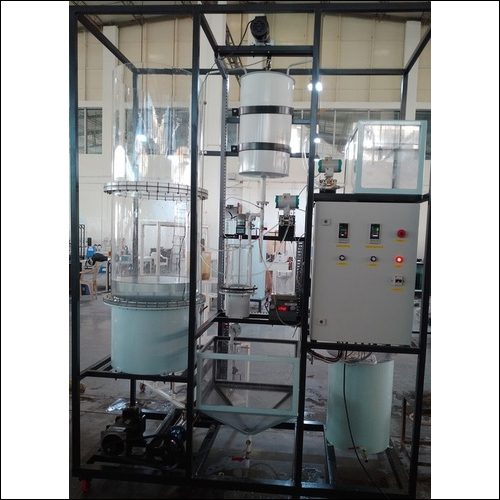
Tell us about your requirement

Price:
Quantity
Select Unit
- 50
- 100
- 200
- 250
- 500
- 1000+
Additional detail
Mobile number
Email

More Products in Enviornmental & Bio-engineering Lab. Category
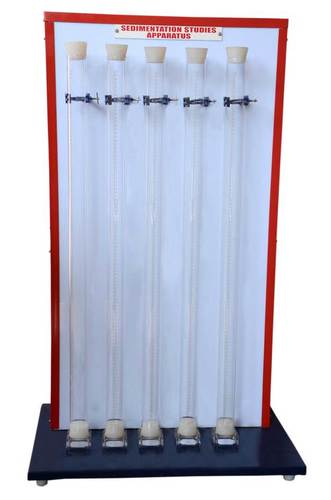
Sedimentation Studies Apparatus
Minimum Order Quantity : 1 Unit
Equipment Materials : PU
Usage : For College Labs
Material : Metal, Glass
Operate Method : Manual
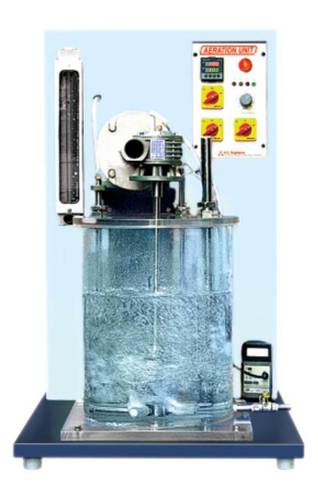
Aeration Unit
Minimum Order Quantity : 1 Unit
Equipment Materials : Brass
Usage : For College
Material : Metal

Aerobic Digester
Minimum Order Quantity : 1 Unit
Equipment Materials : SS
Usage : For University
Material : Metal

Flocculation Test Unit
Minimum Order Quantity : 1 Unit
Equipment Materials : SS
Usage : For University
Material : Metal
Operate Method : Manual

 Send Inquiry
Our Products
- Engineering Laboratory Equipments
- Heat Transfer Lab.
- Fluid Mechanics Lab.
- Fluid Machinery Lab.
- Theory Of Machines Lab.
- Refrigeration & Air-conditioning Lab.
- Laboratory Scientific Equipments
- Process Control & Instrumentation Lab.
- Chemical Reaction Engineering Lab.
- Mechanical Operation Lab.
- Mass Transfer Lab.
- Momentum Transfer Lab.
- Enviornmental & Bio-engineering Lab.
- Fluid Mechanics & Fluid Machinery
- Mechanical Engineering Lab


96, HSIDC Industrial Estate, Jagadhari Road, Ambala Cantt - 133001, Haryana, India

Mr Manoj Gupta
(Director)
Mobile :08045800460
 Send Inquiry
 Send SMS
Developed and Managed by Infocom Network Private Limited.


