
Call us now :08045800460
 Send Inquiry
 Send Inquiry
Filtration Pilot Plant
Filtration Pilot Plant Specification
- Automation Grade
- Semi-automatic
- Core Components
- Feed Tank, Filtration Unit, Pumps, Valves, Control Panel
- Power Source
- Electric
- Voltage
- 220-240V
- Accuracy
- 1%
- Feature
- Skid-mounted, easy to operate, portable
- Model No
- FPP-01
- Capacity
- 10-100 LPH
- Measurement Range
- 1-100 NTU
- Frequency
- 50/60 Hz
- Temperature Range
- Ambient to 100C
- Equipment Materials
- Stainless Steel (SS 304/316)
- Type
- Filtration Pilot Plant
- Usage
- Pilot scale process filtration testing
- Display Type
- Analog and Digital
- Dimension (L*W*H)
- 1200 mm x 800 mm x 1700 mm
- Weight
- 200-450 kg
- Mobility
- Provided with castor wheels
- Filtration Media
- Polypropylene, Cellulose, or custom
- Output Clarity
- <1 NTU (depending on application)
- Safety Features
- Overpressure protection, emergency stop
- Sample Points
- At inlet and outlet for analysis
- Maximum Inlet Pressure
- Up to 4 bar
- Control System
- On-off toggle with alarm indicators
- Surface Finish
- Polished internal and external surfaces
- Cleaning System
- CIP (Clean-In-Place) compatible
- Piping and Fittings
- SS sanitary grade with clamps
- Pump Type
- Centrifugal/Self-priming SS pump
- Operating Pressure Range
- 0.5-3.5 bar
- Flow Meter
- Integrated rotameter (optional digital)
- Number of Filtration Stages
- Single/Multi-stage configurable
- Installation
- Skid-mounted, plug-and-play design
- Application
- Pharmaceutical, Chemical, Food & Beverage, R&D Labs
About Filtration Pilot Plant
Chemical filtration
Mainparameters affecting filtration
Influence offeed flow rate on filtration
AutomaticPID control
Plantsupervision
Technical Details
Framework ofAISI 304 stainless steel with castors
Sand filterof borosilicate glass with decreasing particle size and capacity of 30 l
Activatedcarbon filter of borosilicate glass with capacity of 30 l
4 pressuregauges, with range of 0 to 10 m of water column
Centrifugalpump with casing and rotor of AISI 304 stainless steel and flow-rate of 3000l/h
Variablearea flowmeter of AISI 304 stainless steel, with range of 100 to 1000 l/h
Meteringpump of plastic material for sodium hypochlorite, with flow rate of 3 l/h
Meteringpump of plastic material for flocculent, with flow-rate of 3 l/h
2 feed tanksof AISI 304 stainless steel with capacity of 120 l
Tank of AISI304 stainless steel for collecting the filtered water with capacity of 200 l
Thermoresistance Pt 100 with sheath of AISI 316 stainless steel
Board-typeelectronic temperature indicator
Switch board,complying with EC conformity mark, including plant synoptic and ELCB
Connectinglines and valves of AISI 304 and 316 stainless Steel
Pneumatic controlvalve of stainless steel AISI 316 for feed flow rate of water, Cv = 2.5
Electropneumaticconverter (4 to 20 A / 0.2 to 1 bar)
Electronic turbidmeter for measuring the turbidity of the water flowing in and out of filters,with programmable range and 4 to 20 mA output signal
DigitalmicroprocessorPID controller, with two control loops
Supervisionsoftwarefor Windows: it enables to control ONOFF signals, analog signalscoming from PIDcontroller, realtime trend and historical trend
An ENGLISHinstructionmanual consisting of experimental procedures, block diagram etc.will beprovided along with the Apparatus.
The wholeset-upis well designed and arranged on a rigid structure painted withindustrial PUPaint.
Flexible Configurations for Varied Applications
Tailor the pilot plant to your process requirements: select from single or multi-stage filtration, several filtration media options, and both analog and digital displays for monitoring. Its versatility makes it suitable for diverse pilot-scale filtration tasks in pharmaceuticals, chemicals, food & beverage production, and laboratory research.
Superior Safety and Ease of Operation
The plant features overpressure protection, emergency stop, and alarm indicators for user safety. With a plug-and-play, skid-mounted frame and castor wheels, it provides hassle-free installation and mobility. The semi-automatic control panel and intuitive on-off toggle enhance operator convenience during filtration trials.
Accurate and Reliable Performance
Capable of handling capacities between 10-100 LPH, this pilot plant provides output clarity of <1 NTU, depending on filtration needs. Integrated sample points at the inlet and outlet support thorough performance analysis. The design ensures accurate results, thanks to 1% measurement accuracy and precise pressure and temperature control.
FAQ's of Filtration Pilot Plant:
Q: How does the Filtration Pilot Plant ensure high product clarity in its output?
A: The plant uses efficient filtration media such as polypropylene, cellulose, or custom options to achieve output clarity of less than 1 NTU, depending on the application. Its design allows for accurate control of flow and pressure, ensuring optimal filtration performance.Q: What cleaning process is recommended for this pilot plant?
A: This Filtration Pilot Plant is Clean-In-Place (CIP) compatible, making it easy to clean without dismantling the system. Regularly running a CIP solution through the system helps maintain hygienic operation, particularly important for pharmaceutical and food applications.Q: When should the filtration media be replaced or serviced?
A: Filtration media should be checked based on process flow resistance and output clarity. If pressure drop increases or output clarity falls outside set standards, replace or service the media as per manufacturer guidelines or after a specified number of filtration cycles.Q: Where can this pilot plant be installed and operated?
A: The pilot plant is skid-mounted and features a plug-and-play design, allowing installation in process areas, laboratories, or pilot testing facilities. Its compact dimensions and castor wheels make it easily relocatable within pharmaceutical, chemical, or food production environments.Q: What types of processes and scales is this equipment best suited for?
A: Designed for pilot scale process filtration testing, the plant is ideal for small-batch product development, process validation, and quality trials in pharmaceutical, chemical, food & beverage sectors, and R&D laboratories.Q: How are safety and monitoring managed during operation?
A: The system is equipped with overpressure protection, emergency stop, and alarm indicators. Flow meters (rotameters) and control panels with both analog and digital displays allow continuous monitoring, ensuring safe and controlled operation.Q: What are the key benefits of using this filtration pilot plant?
A: Key benefits include flexibility in configuration, accurate and reproducible results, ease of cleaning (CIP), mobility due to castor wheels, user-friendly controls, and robust stainless steel construction for hygiene and durability.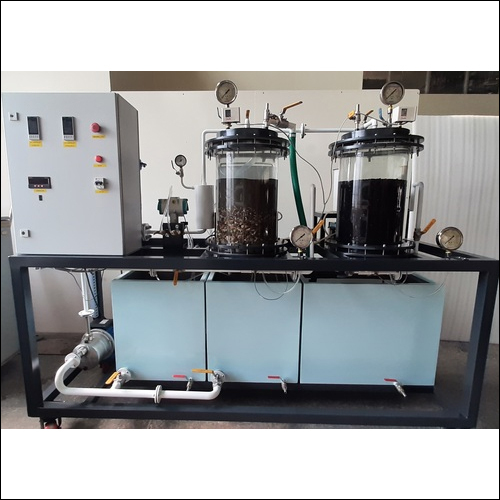
Tell us about your requirement

Price:
Quantity
Select Unit
- 50
- 100
- 200
- 250
- 500
- 1000+
Additional detail
Mobile number
Email

More Products in Mechanical Operation Lab. Category
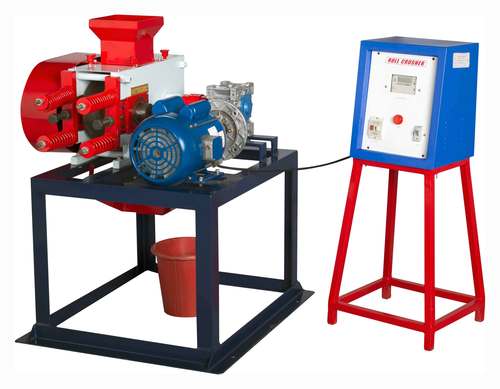
Roll Crusher
Minimum Order Quantity : 1 Unit
Equipment Materials : Brass
Usage : Laboratory
Material : Metal
Voltage : 240 Volt (v)
Power : 1000 Watt (w)
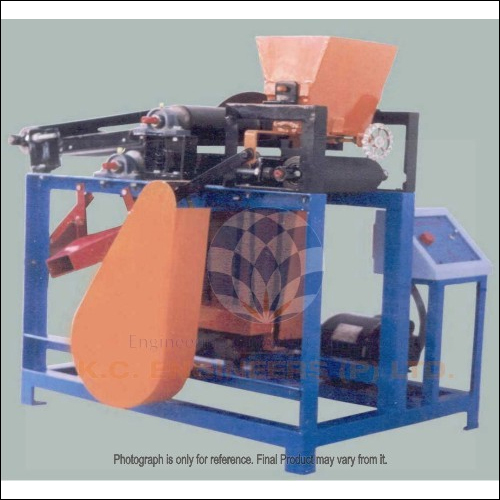
Magnetic Separator
Minimum Order Quantity : 1 Unit
Equipment Materials : SS
Usage : For Laboratory
Material : Iron
Voltage : 220 Volt (v)
Power : 1000 Watt (w)
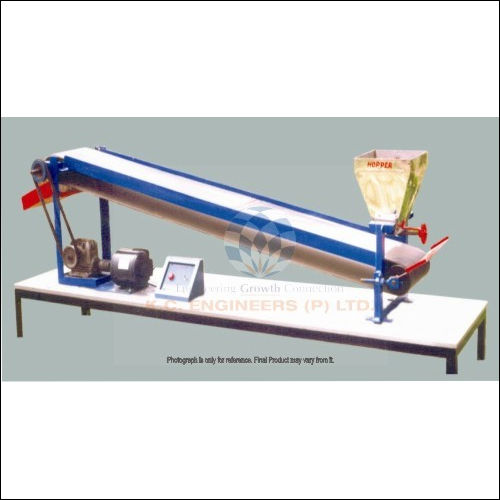
Belt Conveyor
Minimum Order Quantity : 1 Unit
Equipment Materials : Pu
Usage : For University Labs
Material : Iron
Voltage : 220 Volt (v)
Power : 1000 Watt (w)
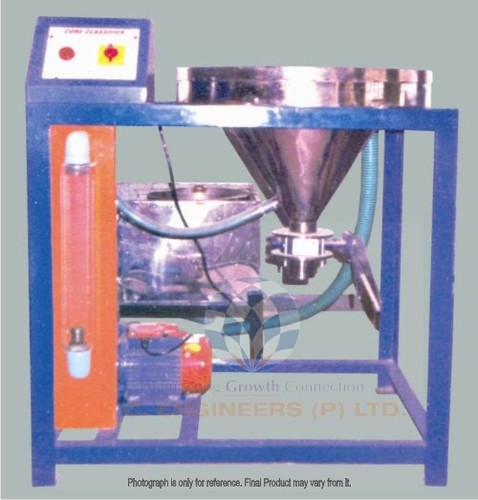
Cone Classifier
Minimum Order Quantity : 1 Unit
Equipment Materials : SS
Usage : For College and University
Material : Metal
Voltage : 220 Volt (v)
Power : 1000 Watt (w)

 Send Inquiry
Our Products
- Engineering Laboratory Equipments
- Heat Transfer Lab.
- Fluid Mechanics Lab.
- Fluid Machinery Lab.
- Theory Of Machines Lab.
- Refrigeration & Air-conditioning Lab.
- Laboratory Scientific Equipments
- Process Control & Instrumentation Lab.
- Chemical Reaction Engineering Lab.
- Mechanical Operation Lab.
- Mass Transfer Lab.
- Momentum Transfer Lab.
- Enviornmental & Bio-engineering Lab.
- Fluid Mechanics & Fluid Machinery
- Mechanical Engineering Lab


96, HSIDC Industrial Estate, Jagadhari Road, Ambala Cantt - 133001, Haryana, India

Mr Manoj Gupta
(Director)
Mobile :08045800460
 Send Inquiry
 Send SMS
Developed and Managed by Infocom Network Private Limited.


