
Call us now :08045800460
 Send Inquiry
 Send Inquiry
Shell And Tube Heat Exchanger
Shell And Tube Heat Exchanger Specification
- Accuracy
- High heat transfer efficiency
- Control Type
- Manual/Automatic available
- Features
- High corrosion resistance, robust construction, easy maintenance, efficient heat transfer
- Shape
- Cylindrical with tube bundle
- Heating Capacity
- Depends on process (customized)
- Temperature Resistance
- Up to 400C
- Type
- Shell and Tube Heat Exchanger
- Dimension (L*W*H)
- Customizable as per requirement
- Equipment Type
- Heat Exchanger
- Equipment Materials
- Stainless Steel, Mild Steel, Copper, Brass
- Power
- Not Applicable (passive device)
- Material
- Stainless Steel / Mild Steel / Copper
- Application
- Industrial heating, cooling processes, chemical plants, power stations
- Capacity (Ltr)
- 100-50000 Liters (customized)
- Tube Diameter
- 12 mm to 25 mm (customizable)
- End Connection
- Flanged / Threaded / Welded
- Thickness
- 3 mm to 12 mm (as per design)
- Tube Bundle Material
- Copper, Stainless Steel, Admiralty Brass
- Design Standard
- ASME/TEMA/IS (as per requirement)
- No. of Tubes
- Custom-made based on capacity
- Test Pressure
- Upto 20 bar
- Mounting Type
- Horizontal/Vertical
- Shell Diameter
- 150 mm to 2000 mm (customized)
- Surface Finish
- Polished / Painted
- Maintenance
- Easy tube cleaning and replacement
About Shell And Tube Heat Exchanger
It has aninterfacing unit designed by K. C. Engineers along with Lab view software. Thiseducational software allows/enables user to log the real time experimental dataand tabulate the experimental/sample reading according to the requirement ofexperiment. User will have a control on data logging, printing the stored data and preparingspread sheets in Excel. Flexible graph plotting facility is also available inthe software.Technical Details :
Bench Top Unit : Dedicated bench top supply unit for differentheat exchangers hot water circuit with tank,
heater,temperature controller, pump and protection against lack of water will be
provided.
: The water for heat exchanger accessorieswill be With quick-release couplings.
DAQ : With all function and parameters
Pump : Have power consumption of 120 watt, flow rate maximum 600 LPH ata head of 30m
approx
HotWater Circuit : Heater, pump, protection against lowwater level, temperature sensor
Hot Water Tank : Capacity10-12 L
Heater : 3Kw with temperature control ambient to90C
: Heater will be controlled by computersignal
Flow measurement : 2Nos., Flow Sensors( 10-250LPH) for flow measurement of hot and cold water,
Output4-20 mA.
Temperature Sensor : RTDPT-100 type (Temperature ambient to 100C , 6 No)
Temperature Measurement : Bytemperature transmitter, Output 4-20 mA, 6Nos)
Shell & Tube Heat Exchanger
Transparent shell and tube heat exchanger incross parallel flow and cross counter flow operation.
Minimum heat transfer area of about 200 cm
The heat exchangerwill have a tube bundle of SS having an ODof 6mm and wall thickness of 1mm.
No of tubes 7minimum.
The shell will betransparent (PMMA) having an OD of 50mmand wall thickness of 3mm.
There will be at least 4 baffles plates in the heat Exchanger.
The heatexchanger will be space saving, that is, it will fit on the service unititself.
With Standardmake On/Off switch, Mains Indicatoretc.
High Speed Data Acquisition Card of National Instruments.
Water connections will have quick releasecouplings.
An instruction manual consisting of experimentalprocedures, block diagram etc. will be provided along with the Apparatus.
The whole set-up is well designed and arrangedon a rigid structure painted with industrial PU Paint.
Robust Construction and Customization
Each heat exchanger is constructed to offer maximum durability, with customizable shell and tube sizes, number of tubes, and choice of materials to match your specific process requirements-whether for heating, cooling, or power generation. The cylindrical shape with tube bundles ensures efficient space use and effective heat transfer.
Versatile Applications and Easy Maintenance
Designed for a wide variety of industrial settings, these exchangers facilitate easy tube cleaning and replacement. Their user-friendly maintenance ensures minimal downtime, and multiple end connection options allow for seamless integration into existing systems.
FAQ's of Shell And Tube Heat Exchanger:
Q: How do you select the appropriate tube and shell material for a shell and tube heat exchanger?
A: Material selection depends on the process fluids and operating conditions. Stainless steel, copper, admiralty brass, and mild steel are available. For corrosive environments or high hygiene demands, stainless steel is preferred, while copper and brass suit standard heating or cooling processes.Q: What are the standard and custom options for shell and tube dimensions?
A: Tubing is available in sizes from 12 mm to 25 mm in diameter, and shell diameters can be customized from 150 mm to 2000 mm. Length, width, and height are also tailored to meet your capacity and layout requirements.Q: When should a horizontal versus vertical mounting type be chosen?
A: The choice depends on space availability, process flow, and ease of maintenance. Horizontal mounting is more common for large capacity or easier accessibility, while vertical is suitable where floor area is limited or for specific flow designs.Q: Where are these heat exchangers typically installed?
A: They are widely used in industrial plants, chemical processing units, power stations, and manufacturing facilities across India and globally. Their adaptability and compliance with international standards make them suitable for various industries.Q: What is the process for routine maintenance and tube cleaning?
A: Maintenance is straightforward; tube bundles are easily accessible for inspection, cleaning, or replacement. Regular maintenance involves periodic cleaning to prevent fouling and ensure optimal heat transfer efficiency.Q: How does the heat exchanger provide high heat transfer efficiency?
A: The shell and tube design maximizes surface area exposure between fluids, supported by precise engineering to optimize flow paths. Customizable tube bundles and advanced materials further enhance efficiency for both heating and cooling processes.Q: What are the key benefits of using this type of heat exchanger?
A: Key advantages include robust construction, high corrosion resistance, customizable configurations, efficient heat transfer, and minimal maintenance requirements. These features ensure longevity and reliable performance in demanding industrial conditions.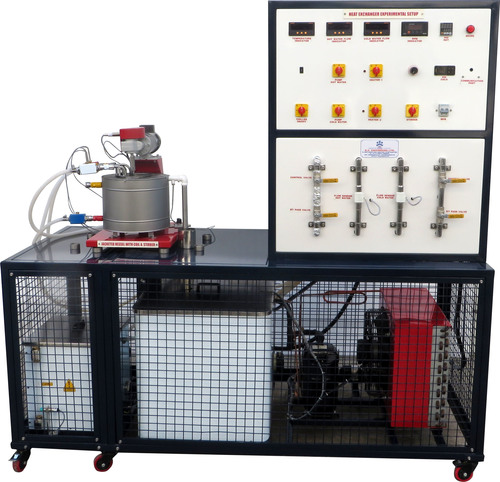
Tell us about your requirement

Price:
Quantity
Select Unit
- 50
- 100
- 200
- 250
- 500
- 1000+
Additional detail
Mobile number
Email

More Products in Heat Transfer Lab. Category
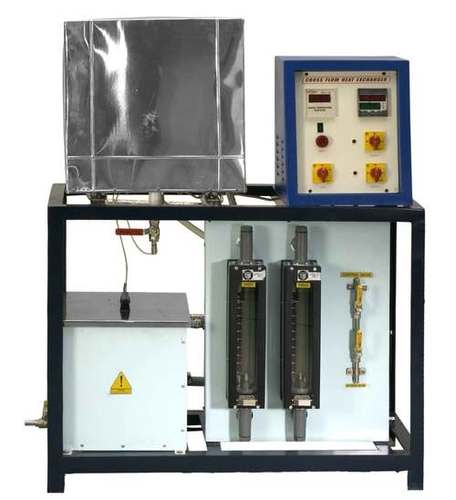
Cross Flow Heat Exchanger
Minimum Order Quantity : 1 Unit
Material : Metal
Voltage : 230 Volt (v)
Warranty : 1 Year
Application : Laboatory
Color : Silver and Black
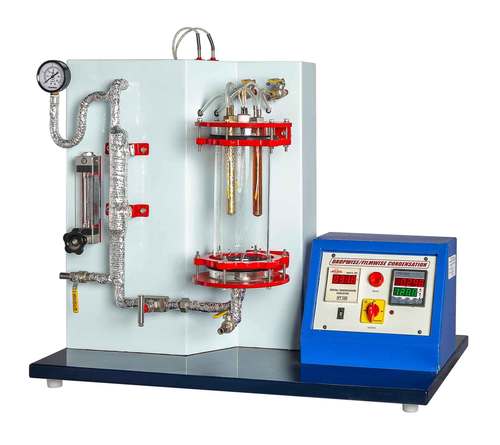
Dropwise & Filmwise Condensation Apparatus
Minimum Order Quantity : 1 Unit
Material : Metal
Voltage : 230 Volt (v)
Warranty : 1 Year
Application : Laboratory
Color : White and Blue
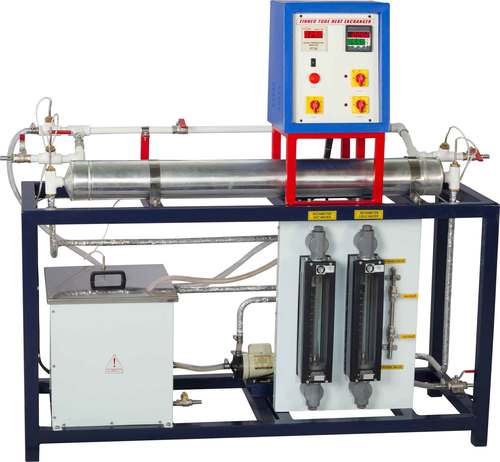
Finned Tube Heat Exchanger
Minimum Order Quantity : 1 Unit
Material : Metal
Voltage : 230 Volt (v)
Warranty : 1 Year
Application : Laboratory
Color : Black and White
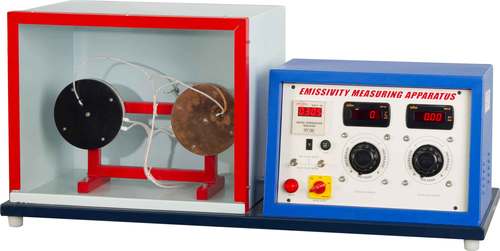
Emissivity Measurement Apparatus
Minimum Order Quantity : 1 Unit
Material : Metal
Voltage : 230 Volt (v)
Warranty : 1 year
Application : Laboratory
Color : Blue and White

 Send Inquiry
Our Products
- Engineering Laboratory Equipments
- Heat Transfer Lab.
- Fluid Mechanics Lab.
- Fluid Machinery Lab.
- Theory Of Machines Lab.
- Refrigeration & Air-conditioning Lab.
- Laboratory Scientific Equipments
- Process Control & Instrumentation Lab.
- Chemical Reaction Engineering Lab.
- Mechanical Operation Lab.
- Mass Transfer Lab.
- Momentum Transfer Lab.
- Enviornmental & Bio-engineering Lab.
- Fluid Mechanics & Fluid Machinery
- Mechanical Engineering Lab


96, HSIDC Industrial Estate, Jagadhari Road, Ambala Cantt - 133001, Haryana, India

Mr Manoj Gupta
(Director)
Mobile :08045800460
 Send Inquiry
 Send SMS
 Call Me Free
Developed and Managed by Infocom Network Private Limited.
