
Call us now :08045800460
 Send Inquiry
 Send Inquiry
Cam Analysis Machine
MOQ : 1 Unit
Cam Analysis Machine Specification
- Power Source
- Electric motor-driven
- Feature
- Interchangeable cams and followers, speed measurement
- Frequency
- 50 Hz
- Core Components
- Cam profile, follower, dial gauge, electric motor, base frame
- Automation Grade
- Manual
- Accuracy
- 0.1 mm (displacement measurement)
- Measurement Range
- 020 mm (follower displacement)
- Model No
- Cam Anlys-23
- Capacity
- Single cam and follower analysis
- Temperature Range
- Ambient
- Voltage
- 220V
- Equipment Materials
- Mild steel frame, steel cam, follower materials
- Type
- Educational Mechanical Lab Equipment
- Usage
- Study of cam-follower dynamics and motion analysis
- Display Type
- Analog scale
- Dimension (L*W*H)
- Approx 950 x 600 x 1000 mm
- Weight
- Approx 40-50 kg
- Follower Types
- Knife edge, roller, mushroom (interchangeable)
- Cam Materials
- Case hardened steel
- Data Recording
- Manual reading via dial gauge
- Ambient Operating Temp.
- 5C to 40C
- Noise Level
- <60 dB
- Pulley and Belt Type
- Standard V-belt
- Included Accessories
- Set of cams, set of followers, tools kit, operation manual
- Motor Power
- 0.25 HP
- Installation
- Bench-top
- Finish
- Powder coated
- Number of Provided Cams
- 3 (tangent, radial, circular arc)
- Speed Range
- 03000 RPM
About Cam Analysis Machine
Experience the majestic Cam Analysis Machine, Cam Anlys-23, crafted for precision study in mechanical labs. Boasting a robust 0.25 HP motor and a speed range of 0-3000 RPM, it champions versatility with three finest interchangeable cams-tangent, radial, and circular arc-paired with knife edge, roller, and mushroom followers. The highly recommended powder-coated mild steel frame ensures durability, while the analog display and 0.1 mm accuracy deliver reliable results. Enjoy the best price from a leading Indian exporter, manufacturer, and supplier. Markdown for exceptional performance in cam-follower dynamics analysis!
Unrivaled Application and Material Features
The Cam Analysis Machine excels in educational and plant settings for thorough cam-follower dynamics study. Its bench-top design is tailored for demonstration, research, and hands-on training in mechanical engineering labs. Notable features include case-hardened steel cams and a powder-coated mild steel frame, ensuring strength and longevity. The machine accommodates interchangeable cams and followers, making it ideal for learning and practical applications, while its low noise operation (<60 dB) suits indoor environments.
Main Domestic Market, Certifications, and Efficient Order Processing
This Cam Analysis Machine is certified for top-tier educational and industrial use, conforming to stringent quality standards across the Indian domestic market. Order processing is highly streamlined-samples are available for evaluation, and machines are dispatched quickly upon order confirmation. The outlay is competitive, ensuring high value and reliable performance for clients. With robust after-sales support, manufacturers guarantee a smooth purchase and installation process, making it an excellent investment for labs and institutes.
Unrivaled Application and Material Features
The Cam Analysis Machine excels in educational and plant settings for thorough cam-follower dynamics study. Its bench-top design is tailored for demonstration, research, and hands-on training in mechanical engineering labs. Notable features include case-hardened steel cams and a powder-coated mild steel frame, ensuring strength and longevity. The machine accommodates interchangeable cams and followers, making it ideal for learning and practical applications, while its low noise operation (<60 dB) suits indoor environments.
Main Domestic Market, Certifications, and Efficient Order Processing
This Cam Analysis Machine is certified for top-tier educational and industrial use, conforming to stringent quality standards across the Indian domestic market. Order processing is highly streamlined-samples are available for evaluation, and machines are dispatched quickly upon order confirmation. The outlay is competitive, ensuring high value and reliable performance for clients. With robust after-sales support, manufacturers guarantee a smooth purchase and installation process, making it an excellent investment for labs and institutes.
FAQ's of Cam Analysis Machine:
Q: How does the Cam Analysis Machine help in studying cam-follower dynamics?
A: The Cam Analysis Machine provides hands-on analysis of cam-follower motion, allowing students and engineers to examine the effects of different cam profiles and follower types on motion transformation and displacement using accurate manual readings.Q: What accessories are included with the Cam Analysis Machine?
A: Each machine includes a set of cams (tangent, radial, circular arc), three interchangeable followers (knife edge, roller, mushroom), a tools kit, and an operation manual for comprehensive usage and maintenance.Q: Where can this machine be installed and used effectively?
A: It is designed for bench-top installation, making it suitable for classrooms, research labs, engineering practice sessions, and plant demonstration applications where cam-follower motion needs to be visualized.Q: What materials are used in the construction of this machine?
A: The frame is made from powder-coated mild steel, while the cams are case hardened steel and followers are crafted for durability. This construction ensures long life and reliable laboratory service.Q: What is the process for obtaining a sample or placing an order?
A: Interested customers can request a product sample through the supplier. Once the order is processed and confirmed, the machine is promptly dispatched with full documentation and support.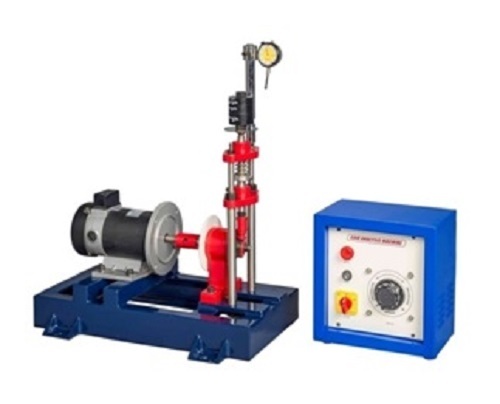
Tell us about your requirement

Price:
Quantity
Select Unit
- 50
- 100
- 200
- 250
- 500
- 1000+
Additional detail
Mobile number
Email

More Products in Mechanical Engineering Lab Category
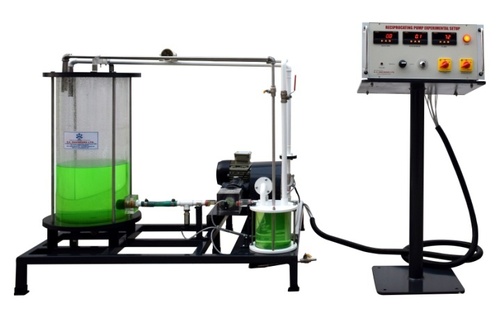
Reciprocating Pump Test Rig
Minimum Order Quantity : 1 Unit
Feature : Pump performance analysis, discharge, and efficiency measurement
Usage : Fluid mechanics laboratory for pump performance study
Power Source : 220240 V, Single phase AC supply
Dimension (L*W*H) : 1200 mm x 600 mm x 900 mm
Type : Laboratory Educational Equipment
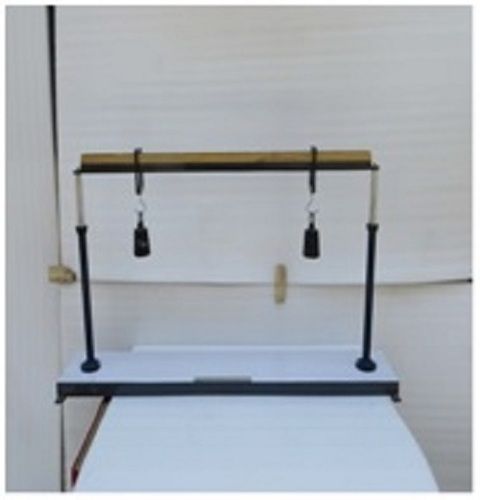
Parallel Forces Apparatus Dial Type 10 kg Balance
Minimum Order Quantity : 1 Unit
Feature : Precise dial force measuring system, easy calibration, rigid construction
Usage : Physics laboratory for verifying laws of parallel forces
Power Source : Manual operation (no electrical power required)
Dimension (L*W*H) : Approx. 500 x 150 x 200 mm
Type : Parallel Forces Apparatus
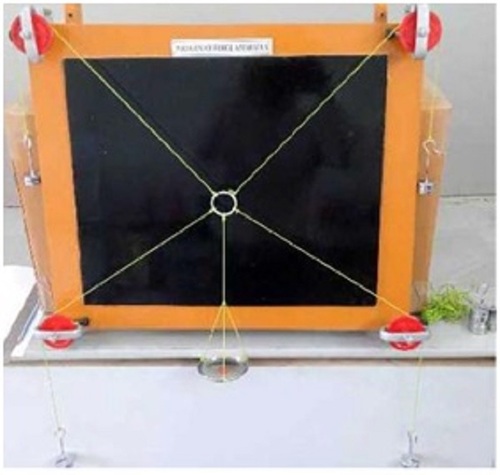
Universal Force Table Normal
Minimum Order Quantity : 1 Unit
Feature : Low friction pulleys, precise angular markings
Usage : Educational physics experiments on forces and equilibrium
Power Source : Manual (No power required)
Dimension (L*W*H) : Table diameter: approx 40 cm, height: 8 cm
Type : Physics Experimental Apparatus
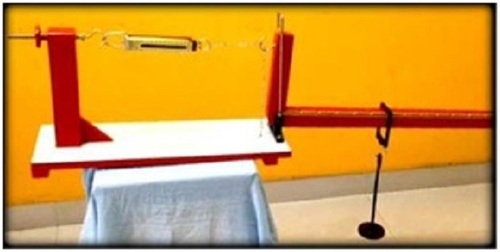
Simply Suported Beam Apparatus With Weights
Minimum Order Quantity : 1 Unit
Feature : Detachable supports; graduated scale for reading deflection
Usage : To study reactions, deflections, and bending of simply supported beams
Power Source : Manual
Dimension (L*W*H) : Approx. 1000 mm x 250 mm x 250 mm
Type : Educational Laboratory Apparatus

 Send Inquiry
Our Products
- Engineering Laboratory Equipments
- Heat Transfer Lab.
- Fluid Mechanics Lab.
- Fluid Machinery Lab.
- Theory Of Machines Lab.
- Refrigeration & Air-conditioning Lab.
- Laboratory Scientific Equipments
- Process Control & Instrumentation Lab.
- Chemical Reaction Engineering Lab.
- Mechanical Operation Lab.
- Mass Transfer Lab.
- Momentum Transfer Lab.
- Enviornmental & Bio-engineering Lab.
- Fluid Mechanics & Fluid Machinery
- Mechanical Engineering Lab


96, HSIDC Industrial Estate, Jagadhari Road, Ambala Cantt - 133001, Haryana, India

Mr Manoj Gupta
(Director)
Mobile :08045800460
 Send Inquiry
 Send SMS
Developed and Managed by Infocom Network Private Limited.


