
Call us now :08045800460
 Send Inquiry
 Send Inquiry
Four Bar Chain Mechanism
MOQ : 1 Unit
Four Bar Chain Mechanism Specification
- Feature
- Easy to Operate, Durable, Precise Motion
- Frequency
- Manual Operation
- Automation Grade
- Manual
- Measurement Range
- Angular Position (Manual)
- Model No
- FBM-102
- Temperature Range
- Ambient (Room Temperature)
- Accuracy
- Demonstration accuracy, not for industrial tolerance
- Power Source
- Manual
- Capacity
- Single Mechanism Setup
- Core Components
- Four Bars, Joints, Frame, Coupler
- Equipment Materials
- Mild Steel Links, Chrome Plated Brass, Acrylic Base
- Type
- Kinematic Mechanism
- Usage
- Engineering Education, Demonstration, Laboratory Experiments
- Display Type
- Analog (Mechanical Linkages)
- Dimension (L*W*H)
- Approx. 450 x 250 x 180 mm
- Weight
- Approx. 10-15 kg
- Movement Type
- Planar Motion
- Base Plate Material
- Powder Coated Steel or Acrylic
- Educational Level
- Engineering and Technical Institutions
- Number of Links
- 4 (Four Bar Linkage)
- Type of Joints
- Rotational/Pin Jointed
- Demonstration Capability
- Can demonstrate Grashof Condition and Inversion
- Surface Finish
- Smooth, Rust Resistant
- Installation
- Benchtop/Portable
- Application
- Study of Kinematics and Mechanism Analysis
- Accessories Included
- User Manual, Experiment Sheet
- Assembly Required
- No (Pre-Assembled)
About Four Bar Chain Mechanism
Get the acclaimed Four Bar Chain Mechanism, Model FBM-102, a prime educational tool for comprehending kinematics and mechanism analysis. Popular among engineering institutions, this valorous setup features four uncommon rotational/pin joints and is constructed with first-rate mild steel, chrome-plated brass, and powder-coated steel or acrylic base for rust resistance and durability. Pre-assembled for benchtop, this analog device precisely demonstrates Grashof condition and inversion. Its smooth surface, manual operation, and included accessories make it the favored choice for insightful, hands-on engineering education nationwide.
Versatile Applications and Industry Use
The Four Bar Chain Mechanism is not only ideal for laboratory demonstrations but also finds application in plant environments and real-world mechanical systems. This uncommon kinematic mechanism aids in analyzing motion on various application surfaces including machinery, robotics, and automation projects. With its valorous and robust structure, the mechanism is a prime resource for both educational and industrial settings, delivering in-depth insights into the principles of planar motion across diverse engineering domains.
Packaging, Delivery, and Certifications
Our Four Bar Chain Mechanism is expertly packaged to ensure damage-free transport via reputable domestic market transport services. Devices are securely boxed with foam and protective layers, maintaining prime condition from exporter to end user. Delivery time varies by rate and destination, typically ranging between 7-14 business days within India. Acclaimed for its quality, the product complies with current industry standards and comes with relevant certifications, making it a trusted choice for engineering education suppliers nationwide.
Versatile Applications and Industry Use
The Four Bar Chain Mechanism is not only ideal for laboratory demonstrations but also finds application in plant environments and real-world mechanical systems. This uncommon kinematic mechanism aids in analyzing motion on various application surfaces including machinery, robotics, and automation projects. With its valorous and robust structure, the mechanism is a prime resource for both educational and industrial settings, delivering in-depth insights into the principles of planar motion across diverse engineering domains.
Packaging, Delivery, and Certifications
Our Four Bar Chain Mechanism is expertly packaged to ensure damage-free transport via reputable domestic market transport services. Devices are securely boxed with foam and protective layers, maintaining prime condition from exporter to end user. Delivery time varies by rate and destination, typically ranging between 7-14 business days within India. Acclaimed for its quality, the product complies with current industry standards and comes with relevant certifications, making it a trusted choice for engineering education suppliers nationwide.
FAQ's of Four Bar Chain Mechanism:
Q: How does the Four Bar Chain Mechanism demonstrate kinematic principles?
A: The mechanism offers hands-on demonstration of kinematic relationships, including Grashof condition and inversion, using clearly visible analog linkages, helping students grasp theoretical concepts through practical analysis.Q: What is included with the Four Bar Chain Mechanism upon delivery?
A: Each package contains a pre-assembled mechanism, a comprehensive user manual, and an experiment sheet, providing everything required for immediate use in laboratory or classroom environments.Q: Where can this mechanism be installed and used?
A: Designed for benchtop or portable use, the mechanism is suitable for engineering classrooms, laboratories, technical institutions, and plant settings requiring motion analysis studies.Q: What is the benefit of using powder-coated steel or acrylic for the base plate?
A: Using powder-coated steel or acrylic provides a smooth, rust-resistant surface for enhanced durability, resulting in a longer equipment lifespan and lower maintenance requirements.Q: When should the Four Bar Chain Mechanism be considered for procurement?
A: It is ideal for procurement when setting up or upgrading mechanical engineering laboratories, especially for courses related to kinematics, mechanism analysis, or hands-on educational demonstrations.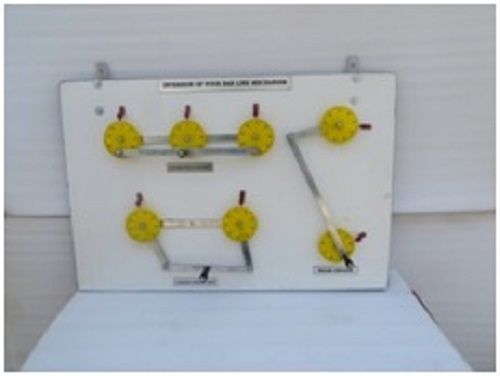
Tell us about your requirement

Price:
Quantity
Select Unit
- 50
- 100
- 200
- 250
- 500
- 1000+
Additional detail
Mobile number
Email

More Products in Mechanical Engineering Lab Category
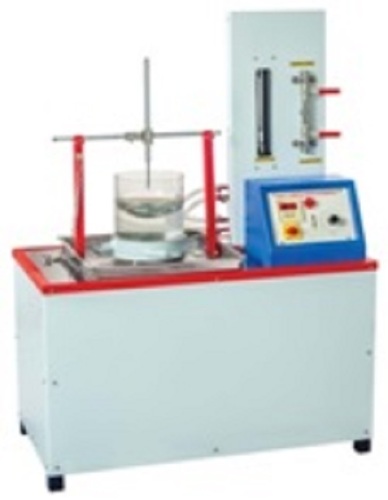
Free and Forced Vortex Apparatus
Minimum Order Quantity : 1 Unit
Usage : Educational, Fluid Mechanics Laboratory Experiments
Temperature Range : Ambient (room temperature); not specifically controlled
Model No : FM/FV10
Feature : Demonstrates free and forced vortex, visual water surface profile, accurate measurement of vortex parameters, easy operation
Automation Grade : Manual
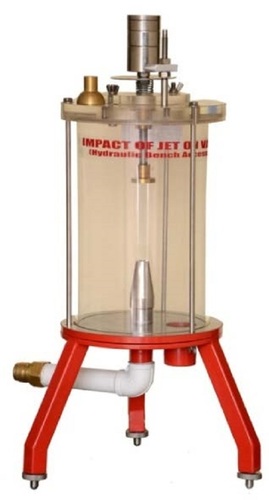
JET IMPACT APPARATUS
Minimum Order Quantity : 1 Piece
Usage : Educational laboratory, for studying impact of jet
Temperature Range : Ambient
Model No : JETIMP01
Feature : Demonstrates force of jet on various vanes; Compact and portable design
Automation Grade : Manual
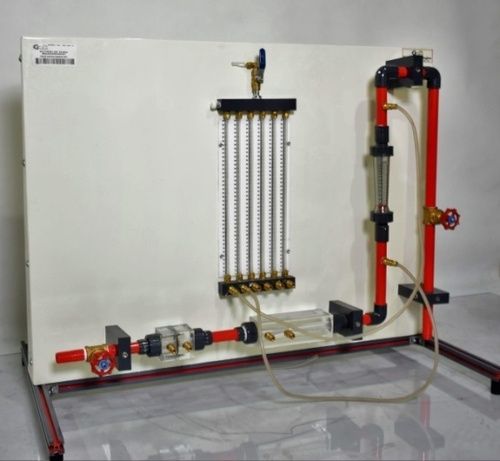
ORIFICE VENTURI and ROTAMETER APPARTUS
Minimum Order Quantity : 1 Piece
Usage : Educational (Fluid Mechanics Experiments)
Temperature Range : Ambient to 50C
Model No : FM OFVOR 11
Feature : Demonstrates Bernoullis Theorem, Differential Pressure Measurement, Direct Flow Comparison
Automation Grade : Manual
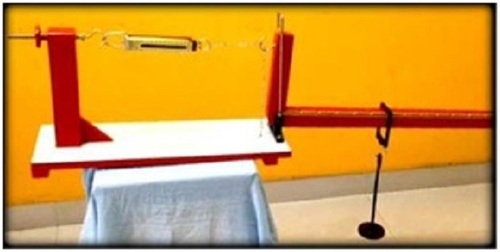
Simply Suported Beam Apparatus With Weights
Minimum Order Quantity : 1 Unit
Usage : To study reactions, deflections, and bending of simply supported beams
Temperature Range : Room Temperature
Model No : SSBA01
Feature : Detachable supports; graduated scale for reading deflection
Automation Grade : Manual

 Send Inquiry
Our Products
- Engineering Laboratory Equipments
- Heat Transfer Lab.
- Fluid Mechanics Lab.
- Fluid Machinery Lab.
- Theory Of Machines Lab.
- Refrigeration & Air-conditioning Lab.
- Laboratory Scientific Equipments
- Process Control & Instrumentation Lab.
- Chemical Reaction Engineering Lab.
- Mechanical Operation Lab.
- Mass Transfer Lab.
- Momentum Transfer Lab.
- Enviornmental & Bio-engineering Lab.
- Fluid Mechanics & Fluid Machinery
- Mechanical Engineering Lab


96, HSIDC Industrial Estate, Jagadhari Road, Ambala Cantt - 133001, Haryana, India

Mr Manoj Gupta
(Director)
Mobile :08045800460
 Send Inquiry
 Send SMS
 Call Me Free
Developed and Managed by Infocom Network Private Limited.


