
Call us now :08045800460
 Send Inquiry
 Send Inquiry
Heat Transfer Coefficient of Composite Wall apparatus
MOQ : 1 Unit
Heat Transfer Coefficient of Composite Wall apparatus Specification
- Accuracy
- 0.5C for temperature measurement
- Voltage
- 230V AC
- Automation Grade
- Manual operation
- Temperature Range
- Ambient to 100C
- Core Components
- Heater, thermocouples, composite wall assembly, insulation, control panel
- Feature
- Visual heat flow analysis, individual layer temperature measurement
- Measurement Range
- Heat Transfer Rate: Up to 40 W
- Model No
- HTC-CW-01
- Capacity
- 1 Experiment at a time
- Power Source
- Electric
- Frequency
- 50 Hz
- Equipment Materials
- SS chamber, Insulated walls, MS frame, Acrylic sheet, Brass, Copper, Bakelite, Wood
- Type
- Educational Laboratory Equipment
- Usage
- Measurement of heat transfer coefficient through composite walls
- Display Type
- Digital Temperature Indicator
- Dimension (L*W*H)
- 800 x 400 x 650 mm
- Weight
- Approx. 30 kg
- Insulation Thickness
- 40 mm minimum
- Heater Capacity
- 1 kW
- Ambient Conditions Required
- Indoor, draft-free environment
- Data Acquisition
- Not included, manual reading
- Safety Features
- Overheat protection for heater, fuse incorporated
- Mounted On
- Powder coated MS stand
- Temperature Sensors Type
- Calibrated thermocouples (K-type)
- Power Cord Length
- 1.5 meters
- Working Fluid
- Air (natural convection)
- Wall Layer Materials
- Combination of brass, copper, bakelite, wood
- Number of Thermocouples
- 6 (placed at different interfaces)
About Heat Transfer Coefficient of Composite Wall apparatus
Jump on a first-string learning experience with the Heat Transfer Coefficient of Composite Wall apparatus, brilliantly engineered for educational labs. Spotlight on its glorious configuration-six calibrated thermocouples pinpoint temperature across brass, copper, bakelite, and wood layers with radiant precision. Personalise your experiments with its intuitive manual reading setup and digital temperature indicator. Mounted on a robust powder-coated MS stand, enjoy overheat protection, fuse safety, and accuracy of 0.5C. This apparatus is ideal for measuring heat transfer rates up to 40 W, making complex concepts crystal clear for students and researchers alike.
Key Features and Applications
The Heat Transfer Coefficient of Composite Wall apparatus presents brilliant versatility, accommodating up to one experiment at a time for detailed investigations in heat transfer. Its individual layer temperature measurement capability and visual heat flow analysis bring concepts to life for students. Use this first-string equipment in engineering colleges, research labs, and technical training institutes to illuminate the study of conduction in composite walls under natural convection. Extensive materials-brass, copper, bakelite, and wood-mirror real-world scenarios for comprehensive analysis.
Supply Ability, Policy & Terms
Our apparatus is offered with secure packaging and careful attention to detail to ensure a safe journey from our facility to yours. Supply ability is steady to fulfill institutional demand in bulk or single units, with flexible sample policies available upon asking price agreement. Outlay is competitive and payment terms are negotiable to suit organizational procurement requirements. Exported, manufactured, and supplied from India, each system meets stringent quality standards for reliability and longevity.
Key Features and Applications
The Heat Transfer Coefficient of Composite Wall apparatus presents brilliant versatility, accommodating up to one experiment at a time for detailed investigations in heat transfer. Its individual layer temperature measurement capability and visual heat flow analysis bring concepts to life for students. Use this first-string equipment in engineering colleges, research labs, and technical training institutes to illuminate the study of conduction in composite walls under natural convection. Extensive materials-brass, copper, bakelite, and wood-mirror real-world scenarios for comprehensive analysis.
Supply Ability, Policy & Terms
Our apparatus is offered with secure packaging and careful attention to detail to ensure a safe journey from our facility to yours. Supply ability is steady to fulfill institutional demand in bulk or single units, with flexible sample policies available upon asking price agreement. Outlay is competitive and payment terms are negotiable to suit organizational procurement requirements. Exported, manufactured, and supplied from India, each system meets stringent quality standards for reliability and longevity.
FAQ's of Heat Transfer Coefficient of Composite Wall apparatus:
Q: How does the Heat Transfer Coefficient of Composite Wall apparatus help in educational laboratories?
A: This apparatus offers a hands-on approach to understanding heat conduction through a composite wall by allowing precise measurement and analysis, making it invaluable for demonstrating thermal concepts to students.Q: What materials are used in the construction of the composite wall in this system?
A: The composite wall is constructed using a combination of high-quality brass, copper, bakelite, and wood to simulate a variety of real-world thermal conduction scenarios.Q: Where should the apparatus be installed for optimal performance?
A: For the most reliable results, install the equipment in an indoor, draft-free environment to maintain stable ambient conditions necessary for accurate experimentation.Q: What is the process for taking temperature measurements?
A: Temperature is manually read using digital indicators connected to six calibrated (K-type) thermocouples strategically placed at different wall interfaces, providing clear insight into temperature gradients.Q: When should the overheat protection and safety features be checked?
A: Inspect the overheat protection system and fuse before each use to ensure the apparatus operates safely and maintains optimal functionality during experiments.Q: What are the typical application areas for this product?
A: This equipment is predominantly used in engineering colleges, technical training centers, and research laboratories for practical heat transfer and thermodynamics experiments.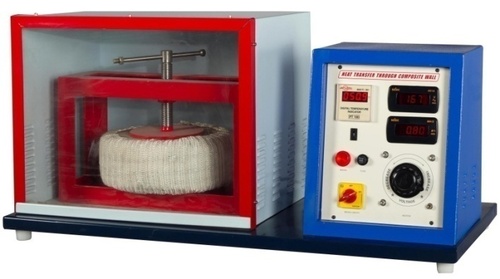
Tell us about your requirement

Price:
Quantity
Select Unit
- 50
- 100
- 200
- 250
- 500
- 1000+
Additional detail
Mobile number
Email

More Products in Mechanical Engineering Lab Category
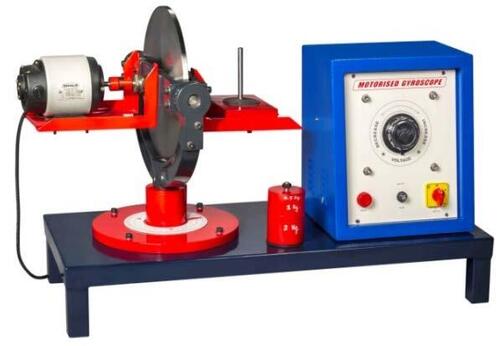
Motorised Gyroscope
Minimum Order Quantity : 1 Unit
Feature : Demonstrates gyroscopic effect under different axis
Usage : Physics Laboratory Experiments
Weight : Approx. 25 kg
Accuracy : 1%
Automation Grade : Manual with Motor Drive
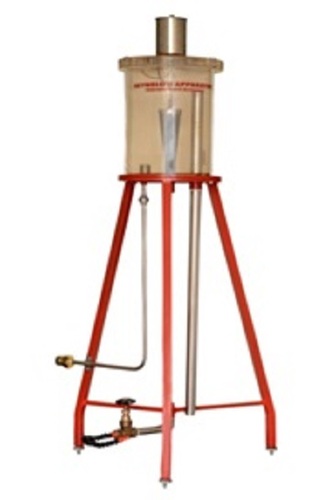
Reynolds Number Apparatus
Minimum Order Quantity : 1 Unit
Feature : Visualization of Flow Profile, Precise Flow Regulation, Detachable Components, Transparent Duct for Observation
Usage : To Demonstrate Laminar, Transitional, and Turbulent Flows (Reynolds Experiment)
Weight : Approximately 1822 kg (depending on setup)
Accuracy : 1% (for flow measurement)
Automation Grade : Manual
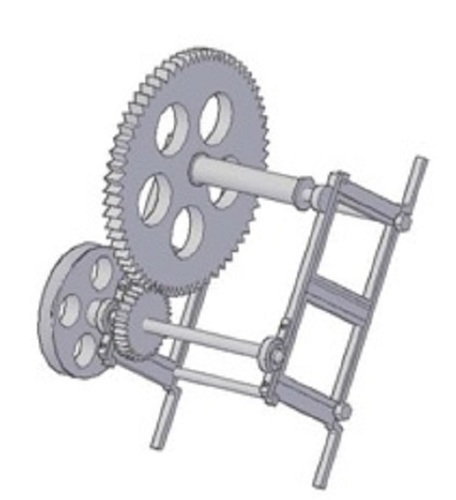
Winch Crab Single Purchase With Weight
Minimum Order Quantity : 1 Unit
Feature : Heavyduty construction, high load capacity
Usage : Industrial lifting and pulling
Weight : 45 kg (Approx)
Accuracy : 2%
Automation Grade : Manual
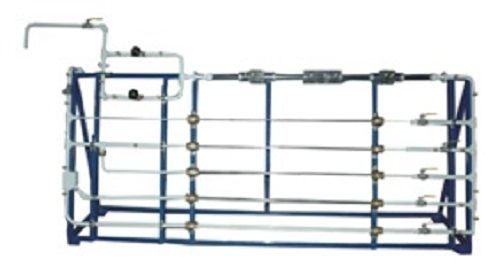
Minor Losses apparatus
Minimum Order Quantity : 1 Unit
Feature : Designed for measuring minor losses in a pipe system
Usage : Educational purposes fluid dynamics studies
Weight : Approximately 1015 kg
Accuracy : High
Automation Grade : Manual

 Send Inquiry
Our Products
- Engineering Laboratory Equipments
- Heat Transfer Lab.
- Fluid Mechanics Lab.
- Fluid Machinery Lab.
- Theory Of Machines Lab.
- Refrigeration & Air-conditioning Lab.
- Laboratory Scientific Equipments
- Process Control & Instrumentation Lab.
- Chemical Reaction Engineering Lab.
- Mechanical Operation Lab.
- Mass Transfer Lab.
- Momentum Transfer Lab.
- Enviornmental & Bio-engineering Lab.
- Fluid Mechanics & Fluid Machinery
- Mechanical Engineering Lab


96, HSIDC Industrial Estate, Jagadhari Road, Ambala Cantt - 133001, Haryana, India

Mr Manoj Gupta
(Director)
Mobile :08045800460
 Send Inquiry
 Send SMS
 Call Me Free
Developed and Managed by Infocom Network Private Limited.


