
Call us now :08045800460
 Send Inquiry
 Send Inquiry
TEMPERATURE CONTROL TRAINER (Computer Controlled System)
MOQ : 1 Unit
TEMPERATURE CONTROL TRAINER (Computer Controlled System) Specification
- Material
- Metal
- Color
- White
- Usage
- Laboratory
- Equipment Materials
- Copper
- Type
- Temperature Control
- Temperature Range
- 50 Celsius (oC)
TEMPERATURE CONTROL TRAINER (Computer Controlled System) Trade Information
- Minimum Order Quantity
- 1 Unit
- Payment Terms
- Telegraphic Transfer (T/T), Cash in Advance (CID), Cheque, Cash Advance (CA)
- Supply Ability
- 1 Unit Per Day
- Delivery Time
- 2-4 Week
- Main Export Market(s)
- Australia, North America, South America, Eastern Europe, Western Europe, Middle East, Africa, Asia, Central America
- Main Domestic Market
- All India
About TEMPERATURE CONTROL TRAINER (Computer Controlled System)
DESCRIPTION :The process setup consists of heating tank fitted with thyristor-controlled heater for on line heating of the water. Water is supplied from laboratory constant head tank and its flow can be manipulated and measured by provided Rotameter. The temperature of the heated water is sensed by RTD sensor. This measured variable through Temperature Transmitter is communicated to Digital Indicating Controller. Error is calculated and output, accordingly, is communicated to Thyristor Controlled heater to achieve the Set Point. These units along with necessary piping are supported in a well-designed housing and are fixed on base plate.
EXPERIMENTATION :
- To study the open loop or manual control
- To study the proportional control
- To study the two mode (P+I) control
- To study the two mode (P+D) control
- To study the three mode (PID) control
- To study the tuning of controller (Open loop method) using Zeigler-Nichols method.
- To study the stability of the system using the BODE PLOT.
- Auto Tuning
Advanced Laboratory Temperature Management
Experience state-of-the-art temperature regulation for your laboratory experiments. The Temperature Control Trainer combines quality materials, including copper and metal, with a computer-controlled interface to deliver consistent and accurate results. Whether for educational or research use, it ensures precise control and easy monitoring, making it an ideal training solution.
Engineered for Education and Research
Designed specifically for laboratory environments, this temperature trainer provides educators and students with an intuitive way to explore temperature control systems. Its user-friendly setup and clear computer interface foster interactive learning and allow users to perform a variety of experiments with confidence.
FAQs of TEMPERATURE CONTROL TRAINER (Computer Controlled System):
Q: How does the Temperature Control Trainer (Computer Controlled System) operate in a laboratory setting?
A: The trainer operates by integrating a computer-controlled system with reliable copper and metal components, allowing users to set, monitor, and regulate temperatures precisely up to 50C. This ensures consistent results and safe experimentation.Q: What are the main materials used in this equipment, and how do they support its effectiveness?
A: The trainer is manufactured using high-quality copper and metal, which provide excellent thermal conductivity and structural durability. These materials contribute to accurate temperature control and long-lasting performance.Q: When is the best time to use the Temperature Control Trainer for laboratory experiments?
A: It is ideal for use during laboratory sessions focused on thermodynamics, process control, or instrumentation. Its computer-controlled mechanism allows for demonstrations and hands-on learning whenever temperature regulation is required.Q: Where can this Temperature Control Trainer be sourced from, and does the supplier export internationally?
A: You can source the Temperature Control Trainer directly from manufacturers, suppliers, and exporters based in India. The supplier offers international shipping and is experienced in handling export requirements.Q: What processes can be demonstrated or studied using this laboratory trainer?
A: The trainer is suitable for demonstrating and studying heat transfer, temperature regulation, and control strategies. Students can experiment with feedback control loops and observe system responses under various conditions.Q: How should the trainer be used for optimal educational benefit?
A: The trainer should be used to conduct hands-on experiments where students can interact with the computer interface, set desired temperatures, and monitor real-time changes. This approach enhances practical understanding of temperature control principles.Q: What are the key benefits of using a computer-controlled temperature trainer in teaching and research?
A: Benefits include precise temperature management, intuitive system operation, durable equipment construction, and improved learning outcomes. It enables comprehensive demonstrations, accurate data collection, and fosters interactive education.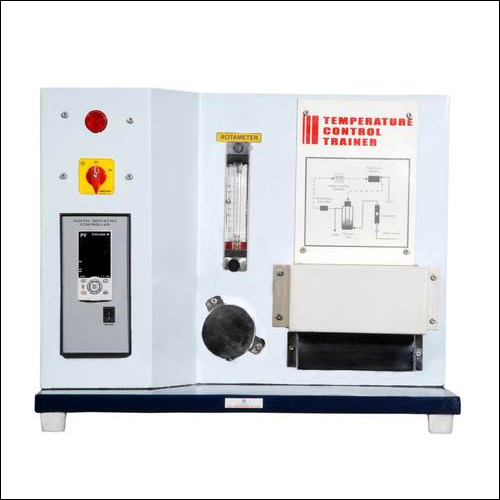
Tell us about your requirement

Price:
Quantity
Select Unit
- 50
- 100
- 200
- 250
- 500
- 1000+
Additional detail
Mobile number
Email

More Products in Process Control & Instrumentation Lab. Category
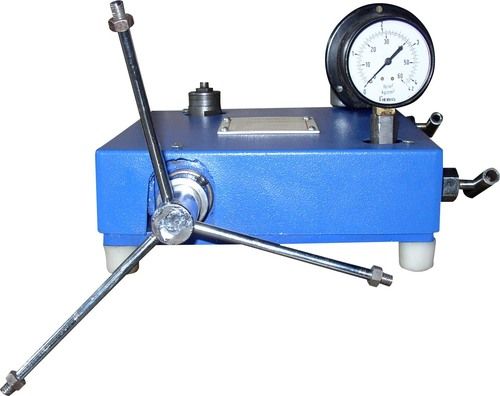
Calibration of Pressure Gauges
Equipment Materials : Stainless Steel, Brass
Temperature Range : 10C to +50C
Type : Pressure Gauge Calibration
Usage : Calibration Laboratories, Industrial Applications
Voltage : 220 V for digital equipment
Fundamentals of Temperature Measurement
Equipment Materials : Paper, Cardboard Bound, Printed Matter
Temperature Range : 200C to 1600C
Type : Fundamentals of Temperature Measurement (Text/Reference Book)
Usage : Educational, Laboratory, Research, Industrial
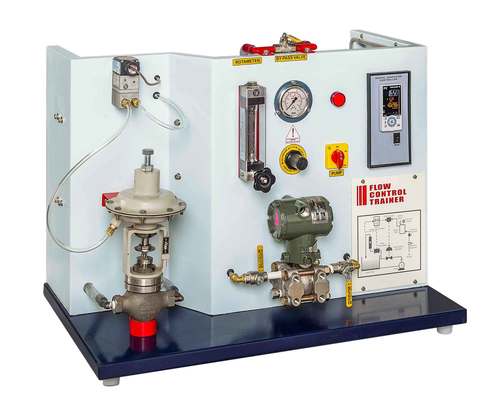
Flow Control Trainer (Computer Controlled System)
Minimum Order Quantity : 1 Unit
Equipment Materials : Brass
Temperature Range : 60 Celsius (oC)
Type : Flow Control
Usage : Laboratory
Voltage : 220 Volt (v)
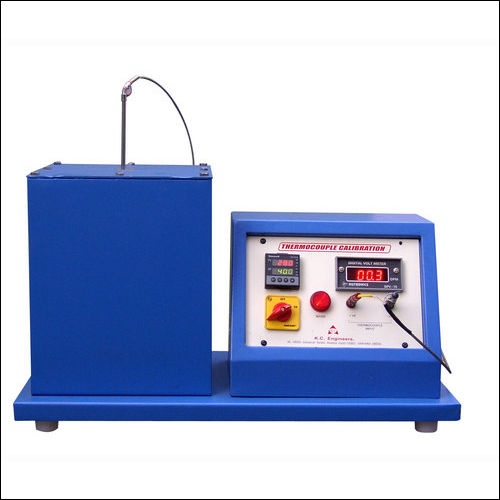
CALIBRATION OF THERMOCOUPLE
Minimum Order Quantity : 1 Unit
Equipment Materials : Copper
Temperature Range : 110 Celsius (oC)
Type : Thermocouple
Voltage : 220 Volt (v)

 Send Inquiry
Our Products
- Engineering Laboratory Equipments
- Heat Transfer Lab.
- Fluid Mechanics Lab.
- Fluid Machinery Lab.
- Theory Of Machines Lab.
- Refrigeration & Air-conditioning Lab.
- Laboratory Scientific Equipments
- Process Control & Instrumentation Lab.
- Chemical Reaction Engineering Lab.
- Mechanical Operation Lab.
- Mass Transfer Lab.
- Momentum Transfer Lab.
- Enviornmental & Bio-engineering Lab.
- Fluid Mechanics & Fluid Machinery
- Mechanical Engineering Lab


96, HSIDC Industrial Estate, Jagadhari Road, Ambala Cantt - 133001, Haryana, India

Mr Manoj Gupta
(Director)
Mobile :08045800460
 Send Inquiry
 Send SMS
 Call Me Free
Developed and Managed by Infocom Network Private Limited.


