
Call us now :08045800460
 Send Inquiry
 Send Inquiry
Pelton Wheel Turbine Test Rig For Laboratory Equipment
Pelton Wheel Turbine Test Rig For Laboratory Equipment Specification
- Speed Range
- Up to 3000 RPM
- Temperature Resistance
- Up to 50C
- Accuracy
- 1% (Flow and Speed Measurement)
- Display Type
- Digital RPM & Flow Display
- Shape
- Rectangular base, circular turbine
- Control Type
- Manual or Electronic Tachometer
- Features
- Compact design, corrosion-resistant, ease of operation, direct observation, fitted with pressure and flow measurement devices
- Power Supply
- Single Phase
- Glass Type
- Acrylic (for measuring tank/observation window)
- Usage
- Industrial
- Type
- Pelton Wheel Turbine Test Rig
- Dimension (L*W*H)
- Approx. 1500mm x 800mm x 1400mm
- Product Type
- wheel Turbine Test Rig
- Equipment Type
- Wheel Turbine Test Rig
- Equipment Materials
- Stainless steel with powder coated mild steel frame
- Power
- 1 HP Motor
- Voltage
- 220V AC, 50 Hz
- Material
- Stainless steel
- Application
- Industrial and Educational Demonstration
- Warranty
- 1 Years
- Capacity (Ltr)
- 70 Liters (sump tank)
- Test Parameters
- Discharge, Pressure, Output Power, Efficiency
- Safety Features
- Overload Protection for Motor
- Frame Construction
- Mounted on sturdy MS/SS frame with anti-vibration pads
- Installation
- Tabletop or floor-mounted
- Pressure Measurement
- Pressure Gauge (Bourdon)
- Turbine Runner Material
- Stainless steel/machined aluminum
- Sump Tank Material
- Stainless steel
- Pump Power
- 0.5 HP Centrifugal Pump
- Drive Type
- Direct Coupled
- Orifice Outlet
- Standard Orifice Fitted
- Experimentation
- Determination of efficiency, characteristic curves, and power output
- Calibration
- Calibrated Orifice and Flow Meters
- Water Circulation
- Closed loop with centrifugal pump
- Measuring Tank Material
- Acrylic/SS
- Nozzle Material
- Brass/SS
About Pelton Wheel Turbine Test Rig For Laboratory Equipment
Pelton Wheel Turbine is only impulse water turbine now in common use, named in honour of Sir L. A. Pelton (1829-1908) of California, USA. It is a tangential flow impulse turbine. The water strikes the Buckets along the tangent of the runner. The energy available at the inlet of the turbine is only kinetic energy. The pressure at the inlet and outlet of the turbine is atmospheric. This turbine is used where water at high head is available. The main aim is to effectively understand the performance characteristics of a Pelton Wheel Turbine Test Rig. The other objective is to effectively understand the construction and operation of a Pelton Wheel Turbine. The turbine will be powered by a centrifugal pump, which will be driven electrically. The turbine output will be measured by a dynamometer. A water tank, piping, and other required accessories must be supplied with the test rig. Self-explanatory operating manuals must be provided with each system. Detailed theory, as well as practical exercises, will be included in the manual.
Experimentation/Learning Objectives
- Study of the construction and operation of the pelton wheel turbine.
- Determination of constant head Characteristics curve.
- Determination of Constant Speed Characteristics curve.
- Determine of constant efficiency curve.
Robust Construction and Materials
Crafted for longevity, the Pelton Wheel Turbine Test Rig utilizes stainless steel and machined aluminum for turbine components, along with acrylic or SS measuring tanks and a sturdy frame with anti-vibration pads. All materials are selected for durability, temperature resistance up to 50C, and minimal maintenance.
Accurate Data Measurement and Display
Integrated with pressure gauges, calibrated orifice outlets, electronic tachometers, and digital displays, the rig ensures precise measurement of discharge, pressure, flow rate, and turbine speed. The accuracy of readings assists users in reliable experimentation and data analysis.
Versatile Application and Ease of Operation
Suitable for both industrial settings and educational demonstrations, this test rig features a compact design for tabletop or floor installation. The closed-loop circulation system and direct-coupled drive simplify operation, while overload protection guarantees safe usage.
FAQs of Pelton wheel Turbine Test Rig:
Q: How is the output power and efficiency of the Pelton wheel turbine measured?
A: The output power and efficiency are determined using digital RPM and flow displays, calibrated orifice and flow meters, and pressure gauges. By measuring discharge, pressure, and rotational speed, users can compute the turbines efficiency and characteristic curves.Q: What are the main materials used in the construction of this test rig?
A: Key components are made from stainless steel or machined aluminum (turbine runner), brass or stainless steel (nozzle), acrylic/stainless steel (measuring tank), and stainless steel (sump tank and frame). These materials enhance durability and resist corrosion.Q: When should this test rig be used for experimentation or demonstration?
A: The test rig is ideal for scheduled laboratory exercises, classroom demonstrations, and industrial assessments where the determination of turbine performance, efficiency, and characteristic curves is required.Q: Where can the Pelton Wheel Turbine Test Rig be installed?
A: It can be placed on a tabletop or floor-mounted in industrial labs, technical institutes, or engineering colleges. Its compact dimensions ensure flexibility for various installation spaces.Q: What is the process for measuring water flow and pressure in this equipment?
A: Water flow is measured using a calibrated orifice and flow meters, while pressure is monitored with a Bourdon pressure gauge. The closed-loop system with a centrifugal pump maintains consistent water circulation during testing.Q: What safety features does the test rig include to protect the motor?
A: The rig is equipped with overload protection for the motor, ensuring safe operation and minimizing risks during long-duration experiments or unexpected load conditions.Q: What benefits does the test rig offer to users?
A: Users benefit from high measurement accuracy (1%), robust and corrosion-resistant construction, convenient operation, and clear data display, making it suitable for practical training and research purposes.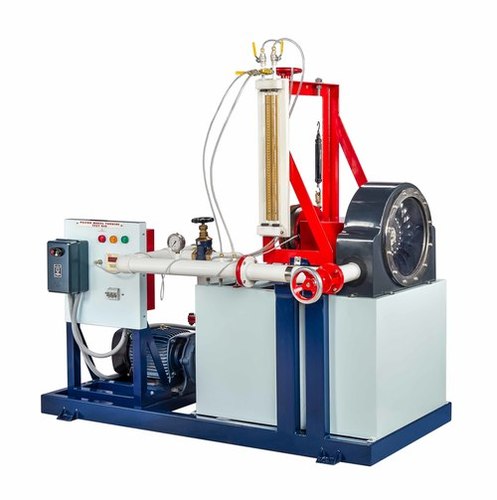
Tell us about your requirement

Price:
Quantity
Select Unit
- 50
- 100
- 200
- 250
- 500
- 1000+
Additional detail
Mobile number
Email

More Products in Fluid Machinery Lab. Category
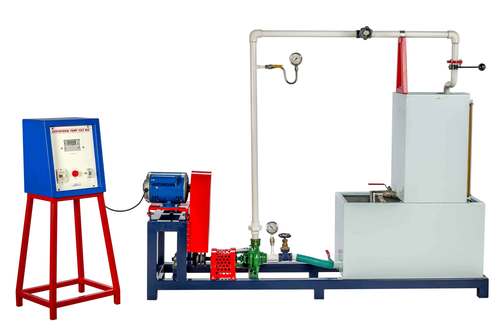
Centrifugal Pump Test Rig (With Variable Speed Swinging Field Dynamometer)
Minimum Order Quantity : 1 Unit
Voltage : 240 Volt (v)
Type : Assortment Set
Warranty : 1 Year
Material : Metal
Equipment Materials : PU
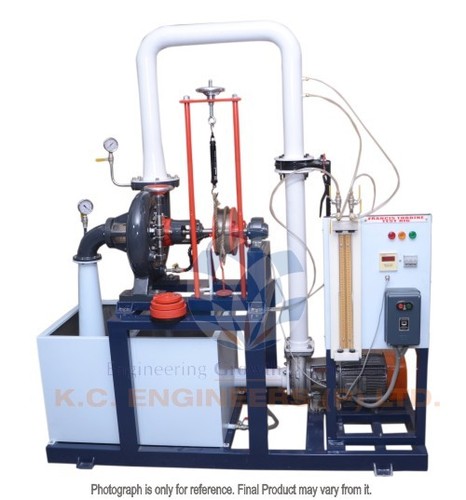
Laboratory Francis Turbine Test Rig
Minimum Order Quantity : 1 Unit
Voltage : 240 Volt (v)
Type : Assortment Set
Warranty : 1 Year
Material : Metal
Equipment Materials : PU Pipe
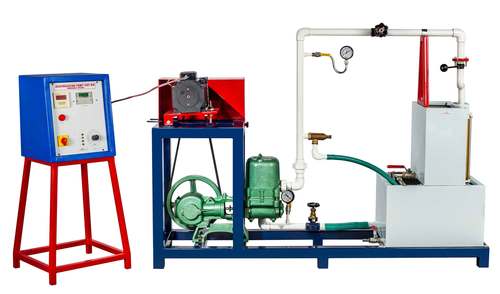
Reciprocating Pump Test Rig (With Variable Speed System)
Minimum Order Quantity : 1 Unit
Voltage : 230 Volt (v)
Type : Assortment Set
Warranty : 1 Year
Material : Metal
Equipment Materials : Brass
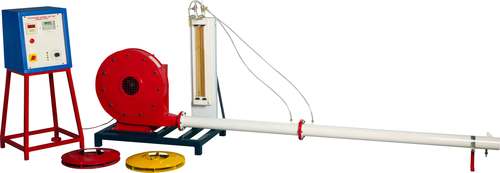
Centrifugal Blower Test Rig (Fixed Speed With Ac Motor)
Minimum Order Quantity : 1 Unit
Voltage : 230 Volt (v)
Type : Assortment Set
Warranty : 1 Year
Equipment Materials : PU

 Send Inquiry
Our Products
- Engineering Laboratory Equipments
- Heat Transfer Lab.
- Fluid Mechanics Lab.
- Fluid Machinery Lab.
- Theory Of Machines Lab.
- Refrigeration & Air-conditioning Lab.
- Laboratory Scientific Equipments
- Process Control & Instrumentation Lab.
- Chemical Reaction Engineering Lab.
- Mechanical Operation Lab.
- Mass Transfer Lab.
- Momentum Transfer Lab.
- Enviornmental & Bio-engineering Lab.
- Fluid Mechanics & Fluid Machinery
- Mechanical Engineering Lab


96, HSIDC Industrial Estate, Jagadhari Road, Ambala Cantt - 133001, Haryana, India

Mr Manoj Gupta
(Director)
Mobile :08045800460
 Send Inquiry
 Send SMS
Developed and Managed by Infocom Network Private Limited.


