
Call us now :08045800460
 Send Inquiry
 Send Inquiry
Worm and Worm Wheel Single With Weights
MOQ : 1 Unit
Worm and Worm Wheel Single With Weights Specification
- Model No
- Lab Gears-006
- Power Source
- Manual Operation (No Electricity Required)
- Feature
- High Durability, Corrosion Resistance, Smooth Operation, Easy to Assemble
- Automation Grade
- Manual
- Accuracy
- Suitable for Classroom DemonstrationNon-Metrological
- Core Components
- Worm, Worm Wheel, Spindle, Removable Weights, Base Stand
- Temperature Range
- Not Applicable (Indoor Educational Use)
- Capacity
- Demonstration Model (weights to show balancing of forces, not load bearing)
- Equipment Materials
- Aluminum Alloy (Wheel), Brass (Worm), Mild Steel Stand, Stainless Steel Screws
- Type
- Physics Laboratory Demonstration Apparatus
- Usage
- Educational/Physics LabsDemonstration of Worm Gearing, Velocity Ratio, and Mechanical Advantage
- Display Type
- Manual/Analog, Visual Demonstration
- Dimension (L*W*H)
- Approx. 250 mm x 150 mm x 150 mm
- Weight
- Appx. 2.5 kg (Varies with weights supplied)
- Rotation Mechanism
- Hand-operated by attached spindle
- Packaging
- Sturdy cardboard box with Safety Foam Inserts
- Wheel Teeth
- 40
- Compliance
- Conforms to standard laboratory apparatus construction guidelines
- Mounting
- Pre-attached on a stable metal base plate
- Finish
- Powder Coated/Polished
- Application
- Demonstrates mechanical advantage and velocity ratio of worm gearing in educational settings
- Shaft Material
- Mild Steel, Chrome Plated for Durability
- Wheel Diameter
- 75 mm
- Worm Material
- Brass, Precision Cut
- Weight Set
- Includes Slotted Brass Weights50 g, 100 g, and 200 g
About Worm and Worm Wheel Single With Weights
Technical Details
Worm and Worm Wheel Single with Weights : will be provided.
An ENGLISH instruction manual consisting of experimental procedures, block diagram etc. will be provided along with the Apparatus.
Demonstrating Worm Gear Physics with Clarity
This demonstration model lays out the principles of worm gearing, mechanical advantage, and velocity ratio in a hands-on, interactive way. Designed for educational settings, it allows students and instructors to visually observe force balancing using the slotted brass weights. The setup is straightforward, facilitating easy assembly so lessons can begin quickly without fuss.
Built for Durability and Repeated Use
Constructed with high-grade materials-brass, aluminum alloy, and corrosion-resistant mild steel-this apparatus is designed for long life under classroom conditions. The chrome-plated shaft and powder-coated or polished finish resist wear and protect against environmental factors, while the strong metal base keeps the demonstration stable during use.
FAQ's of Worm and Worm Wheel Single With Weights:
Q: How do I set up and use the Worm and Worm Wheel Single With Weights in a classroom?
A: Setup involves placing the apparatus on a stable surface, attaching the desired brass weights to the wheel, and rotating the spindle to observe the movement and measure the resulting mechanical advantage. No electrical power is needed, making it convenient and quick to use in a demonstration.Q: What educational benefits does this product offer for physics students?
A: The apparatus allows for hands-on demonstration of worm gearing, mechanical advantage, and velocity ratio, providing students with a tangible understanding of these mechanical concepts. It encourages experiential learning and helps visualize abstract physics principles.Q: When is this demonstration apparatus typically used?
A: It is primarily used during laboratory sessions or classroom demonstrations related to mechanical advantage, simple machines, or gearing systems in physics curricula. Its manual operation ensures it's always ready for impromptu lessons.Q: Where is the ideal location for employing this worm gear model?
A: This demonstration model is best used indoors in physics laboratories, classrooms, or educational workshops, where its sturdy base and safety foam packaging ensure protection on workbenches or demonstration tables.Q: What is the process for adjusting the weights and measuring velocity ratios?
A: Users can vary the weight combinations (50 g, 100 g, 200 g) to explore different force balances. By winding the spindle and observing the wheel's rotation, students can calculate mechanical advantage and verify velocity ratios.Q: What maintenance is required to ensure smooth operation of the device?
A: Regularly check for dust or debris in the gearing, ensure all bolts and screws remain tight, and occasionally wipe down the surfaces. The chrome-plated and powder-coated finish greatly reduces maintenance needs.Q: What is the main advantage of using a manual, analog display for this apparatus?
A: The manual operation fosters direct student engagement, enhances visibility of gearing mechanics, and eliminates dependency on power sources or electronic components, making it reliable and easy to use for educational purposes.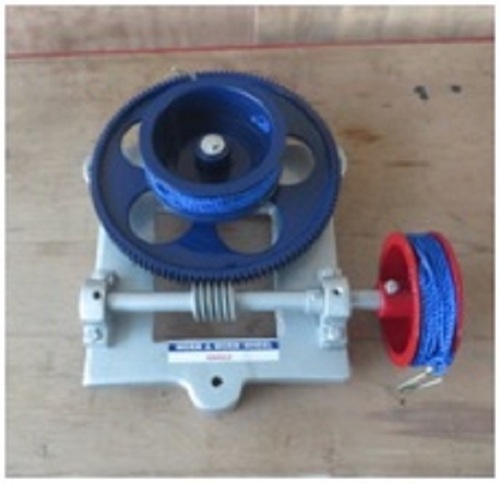
Tell us about your requirement

Price:
Quantity
Select Unit
- 50
- 100
- 200
- 250
- 500
- 1000+
Additional detail
Mobile number
Email

More Products in Mechanical Engineering Lab Category
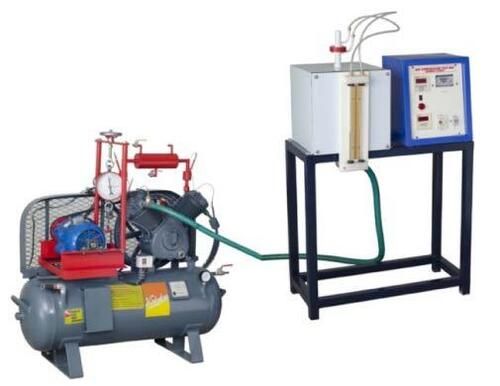
TWO STAGE RECIPROCATING AIR COMPRESSOR
Minimum Order Quantity : 1 Unit
Measurement Range : upto 12 bar (Max Pressure)
Automation Grade : SemiAutomatic
Feature : High Efficiency, Low Noise, Heavy Duty Operation
Weight : 350550 kg (depending on model)
Power Source : Electric
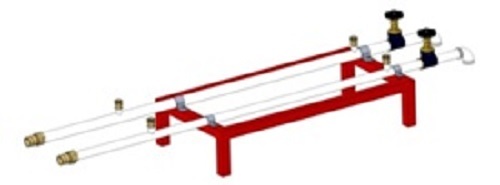
FRICTION FACTOR APPARATUS
Minimum Order Quantity : 1 Unit
Measurement Range : 10500 mm of water column (Manometer)
Automation Grade : Manual
Feature : Detachable pipe sections for various internal diameters
Weight : Approx. 2530 kg
Power Source : Single Phase, 230 V AC supply
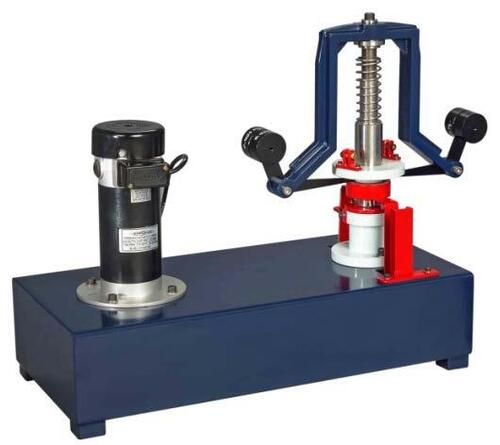
Motorized Governor Apparatus
Minimum Order Quantity : 1 Unit
Measurement Range : Speed Range: Up to 3000 RPM
Automation Grade : Semiautomatic
Feature : Motorized with variable speed control, Transparent cover for observation
Weight : Approx. 35 kg
Power Source : Electric Motor Driven
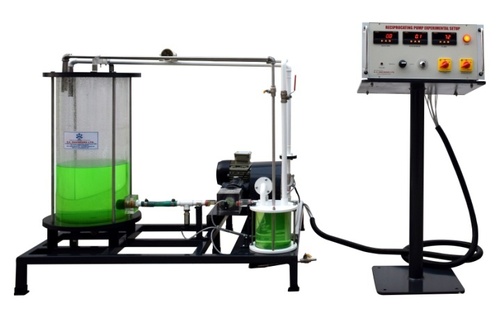
Reciprocating Pump Test Rig
Minimum Order Quantity : 1 Unit
Measurement Range : Up to 2500 LPH
Automation Grade : Manual
Feature : Pump performance analysis, discharge, and efficiency measurement
Weight : Approx. 65 kg
Power Source : 220240 V, Single phase AC supply

 Send Inquiry
Our Products
- Engineering Laboratory Equipments
- Heat Transfer Lab.
- Fluid Mechanics Lab.
- Fluid Machinery Lab.
- Theory Of Machines Lab.
- Refrigeration & Air-conditioning Lab.
- Laboratory Scientific Equipments
- Process Control & Instrumentation Lab.
- Chemical Reaction Engineering Lab.
- Mechanical Operation Lab.
- Mass Transfer Lab.
- Momentum Transfer Lab.
- Enviornmental & Bio-engineering Lab.
- Fluid Mechanics & Fluid Machinery
- Mechanical Engineering Lab


96, HSIDC Industrial Estate, Jagadhari Road, Ambala Cantt - 133001, Haryana, India

Mr Manoj Gupta
(Director)
Mobile :08045800460
 Send Inquiry
 Send SMS
Developed and Managed by Infocom Network Private Limited.


