
Call us now :08045800460
 Send Inquiry
 Send Inquiry
Fundamentals of Temperature Measurement
Fundamentals of Temperature Measurement Specification
- Core Components
- Theory, Diagrams, Calibration Tables
- Model No
- FOTM-2024
- Capacity
- Standard laboratory capacity
- Accuracy
- Theoretical/Reference manual (not instrument based)
- Feature
- In-depth temperature measurement principles, calibration procedures, practical applications
- Temperature Range
- -200C to 1600C
- Measurement Range
- -200C to 1600C
- Equipment Materials
- Paper, Cardboard Bound, Printed Matter
- Type
- Fundamentals of Temperature Measurement (Text/Reference Book)
- Usage
- Educational, Laboratory, Research, Industrial
- Display Type
- Analog
- Dimension (L*W*H)
- Approx. 24 x 16 x 3 cm
- Weight
- Approx. 0.7 kg
- Resolution
- 1C
- Operating Environment
- -10C to 50C
- Mounting Type
- Tabletop
- Storage Temperature
- -20C to 60C
- Calibration
- Factory Calibrated
- Response Time
- Less than 2 seconds
- Application
- Academic Demonstrations, Industrial Process Control
- Sensor Type
- Thermocouple (Type K)
About Fundamentals of Temperature Measurement
Description :
Experimentalintroduction to temperature Measurement: methods, Areas of application,characteristics non electrical method, gas- and liquid-filled thermometers,bimetallic thermometers and temperature measuring strips, electric methods:thermocouple, resistance temperature detector Pt100, thermistor (NTC).
Comprehensive Guide to Temperature Measurement
This reference book delves into the theoretical and applied principles of temperature measurement, with a focus on Type K thermocouples. Covering a broad temperature range from -200C to 1600C, it is tailored for users in education, laboratories, and industry. Factory calibration and straightforward calibration tables allow for reliable application across different settings.
Optimized for Academic and Industrial Environments
Designed for robust educational and industrial use, the book features practical mounting as a tabletop reference. Each section provides clear diagrams and step-by-step procedures, teaching best practices for calibration and measurement, making it indispensable for training, demonstrations, and applied research.
Durable, Accessible, and Easy to Use
Crafted from quality paper with a sturdy cardboard binding, the book measures approximately 24 x 16 x 3 cm and weighs just 0.7 kg, making it portable yet durable. Its intuitive analog displays and concise language ensure accessibility for both beginners and experienced professionals.
FAQs of Fundamentals of Temperature Measurement:
Q: How does the book explain the process of temperature measurement with Type K thermocouples?
A: The book provides a step-by-step exploration of temperature measurement using Type K thermocouples, including theoretical background, connection methods, calibration procedures, and practical application guides with detailed diagrams.Q: What are the primary benefits of using this reference for academic demonstrations and industrial control?
A: This reference offers easily accessible, accurate theoretical material, calibration tables, and real-world examples ideal for academic demonstrations, laboratory research, and industrial process environments.Q: When should this book be used as a reference in educational or industrial settings?
A: This book should be used whenever foundational understanding or theoretical clarification of temperature measurement with thermocouples is requiredespecially during lectures, lab experiments, or process troubleshooting.Q: Where can this book be effectively utilized for maximum educational impact?
A: It is most effective on laboratory benches, in academic classrooms, or at industrial process workstations, where quick reference to principles, calibration procedures, or diagrams supports both teaching and operational needs.Q: What is the process described for calibration within the reference book?
A: The book presents clearly illustrated calibration procedures, including step-wise factory calibration references and validation methods, to ensure users can accurately interpret and apply theoretical calibration data in practice.Q: How can users benefit from the analog display and included diagrams?
A: Analog displays and detailed diagrams visually clarify measurement principles, system response, and calibration procedures, aiding both comprehension and fast referencing during demonstrations or fieldwork.
Tell us about your requirement

Price:
Quantity
Select Unit
- 50
- 100
- 200
- 250
- 500
- 1000+
Additional detail
Mobile number
Email

More Products in Process Control & Instrumentation Lab. Category
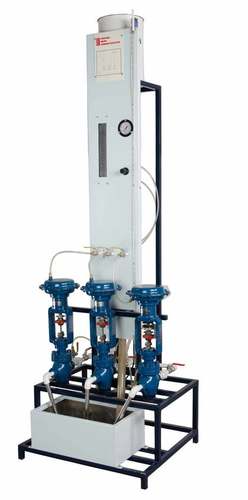
Control Valve Characteristics (Linear, Equal Perce
Minimum Order Quantity : 1 Unit
Usage : For Laboratory
Temperature Range : 70 Celsius (oC)
Material : Metal
Type : Valve
Equipment Materials : Brass
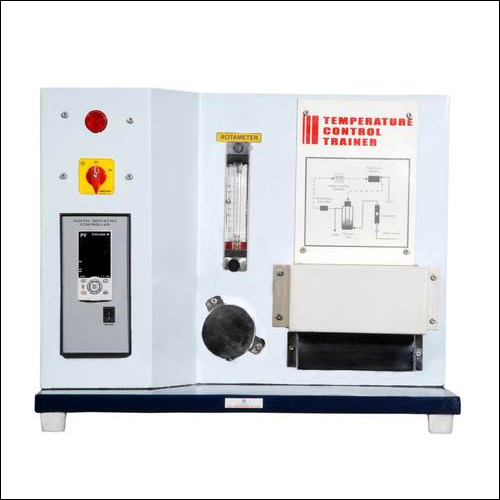
TEMPERATURE CONTROL TRAINER (Computer Controlled System)
Minimum Order Quantity : 1 Unit
Usage : Laboratory
Temperature Range : 50 Celsius (oC)
Material : Metal
Type : Temperature Control
Equipment Materials : Copper
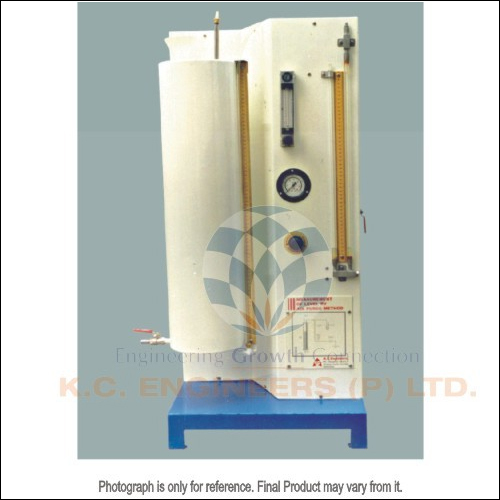
MEASUREMENT OF LEVEL BY AIR PURGE METHOD
Minimum Order Quantity : 1 Inch
Usage : Laboratory
Temperature Range : 50 Celsius (oC)
Material : Metal
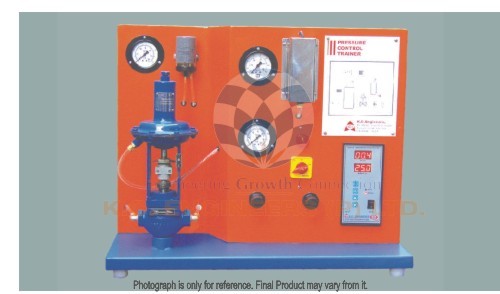
Pressure Control Trainer (Computer Controlled System)
Minimum Order Quantity : 1 Unit
Usage : Laboratory
Temperature Range : 70 Celsius (oC)
Type : Control Trainer

 Send Inquiry
Our Products
- Engineering Laboratory Equipments
- Heat Transfer Lab.
- Fluid Mechanics Lab.
- Fluid Machinery Lab.
- Theory Of Machines Lab.
- Refrigeration & Air-conditioning Lab.
- Laboratory Scientific Equipments
- Process Control & Instrumentation Lab.
- Chemical Reaction Engineering Lab.
- Mechanical Operation Lab.
- Mass Transfer Lab.
- Momentum Transfer Lab.
- Enviornmental & Bio-engineering Lab.
- Fluid Mechanics & Fluid Machinery
- Mechanical Engineering Lab


96, HSIDC Industrial Estate, Jagadhari Road, Ambala Cantt - 133001, Haryana, India

Mr Manoj Gupta
(Director)
Mobile :08045800460
 Send Inquiry
 Send SMS
Developed and Managed by Infocom Network Private Limited.


