
Call us now :08045800460
 Send Inquiry
 Send Inquiry
CAVITATION APPARATUS (HYDRAULIC BENCH ACCESSORY)
CAVITATION APPARATUS (HYDRAULIC BENCH ACCESSORY) Specification
- Capacity
- 5 Litres (Reservoir capacity)
- Automation Grade
- Manual
- Voltage
- 230V AC (via hydraulic bench)
- Temperature Range
- Ambient laboratory conditions (typically 10C to 40C)
- Power Source
- Hydraulic Bench Supply
- Core Components
- Scale, Flow Meter, Transparent Cavitation Section, Pressure Gauge
- Feature
- Visual Observation of Cavitation, Easy Mounting on Hydraulic Bench
- Measurement Range
- Flow measurement up to 4 L/min
- Accuracy
- 1% for manometric measurements
- Model No
- CAVI-05
- Frequency
- 50 Hz
- Equipment Materials
- Stainless Steel, Transparent Acrylic, Powder Coated Mild Steel
- Type
- Hydraulic Bench Accessory
- Usage
- For studying Cavitation phenomenon in hydraulics laboratories
- Display Type
- Manometer readings, Visual Inspection
- Dimension (L*W*H)
- Approx. 700 x 300 x 500 mm
- Weight
- Approx. 10-15 kg
- Test Section Material
- Clear Acrylic for visualization
- Safety Features
- Over-pressure release, splash guard
- Instruction Manual
- Included
- Reservoir Material
- Powder coated steel or stainless steel
- Inlet/Outlet Connections
- Standard quick-connect fittings
- Maximum Operating Pressure
- 1.5 bar
- Working Fluid
- Water
- Operation Mode
- Bench mounted, requires no independent power
- Pipe Diameter
- 16 mm
- Number of Manometers
- 2 (Upstream and Downstream)
- Compatible Benches
- Standard compatible with educational hydraulic benches
- Installation
- Portable, ready-to-use
- Observation Method
- Bubble formation and collapse visualization
- Pump Type
- Uses benchs centrifugal pump
About CAVITATION APPARATUS (HYDRAULIC BENCH ACCESSORY)
Description
Investigation of cavitation process in a venturi nozzle at different flow rates and pressures.
1. Venturi nozzle with 3 pressure measuring points
2. Adjustment of the flow rate via ball valve
3. Pressure reducing valve, adjustable
4.Thermometer for measuring the temperature
5.Flow measurement using rotameter
6. Manometer for displaying the pressure curve in the Venturi nozzle
7. Quick release fitting for easy connection to Hydraulics bench (KCFM-151-...).
Technical Details
Pressure reducing valve:-0.5 to 2 bar
Transparent Venturi nozzle cross - section of flow: Inner diameter: 18 mm and contraction: 10.5 Degree Celsius
output cross-section: inner diameter: 18 mm and enlargement: 4 Degree Celsius narrowest cross-section: inner diameter: 3.5mm
Measuring range pressure:-1 to 1.5 bar, temperature; 0 to 60 Degree Celsius and flow rate: 0 to 1000L/h
A comprehensive manual describing how the experiments are performed and how to commission the equipment will be provided.
Educational software will be as an option
Installation and Training will be provided.
The whole set-up is well designed and arranged on a rigid structure painted with industrial PU Paint.
Experimentation/Learning Objectives
To observe the phenomena of cavitation's
To compare the theoretical and actual pressures at cavitation's condition
Utilities Required
KCFM-151-..........Hydraulic Bench.
Visualize Cavitation Phenomena
The transparent acrylic test section allows students and researchers to directly observe bubble formation and collapse, facilitating a clearer understanding of cavitation in hydraulic systems. Real-time pressure and flow measurements enhance the educational experience.
Simplified Setup and Operation
This apparatus is portable and conveniently mounts on standard hydraulic benches. With quick-connect fittings and a clear instruction manual, installation is effortless, making it instantly ready for laboratory demonstrations or experiments.
Reliable and Safe Performance
Engineered with robust materials, splash guards, and over-pressure release features, the equipment ensures safe operation under laboratory conditions. Accurate manometer readings and manual controls make it ideal for controlled learning environments.
FAQ's of CAVITATION APPARATUS (HYDRAULIC BENCH ACCESSORY):
Q: How is the Cavitation Apparatus installed and made ready for use?
A: The unit is portable and designed for easy mounting on compatible educational hydraulic benches. Installation requires attaching the quick-connect fittings to the inlet and outlet, following the included instruction manual, and connecting to the bench's centrifugal pump.Q: What process is involved in studying cavitation using this apparatus?
A: The process involves regulating water flow through the transparent acrylic test section with the hydraulic bench's pump. Manometers measure the upstream and downstream pressures, while users observe bubble formation and collapse to analyze the onset and intensity of cavitation.Q: When is the best time to use this equipment in a laboratory setting?
A: The apparatus is suitable for use during hydraulic and fluid mechanics laboratory sessions when visual learning and hands-on experimentation with cavitation are required. It operates under ambient laboratory conditions (10C to 40C).Q: Where can the Cavitation Apparatus be used and who benefits from it?
A: This equipment is designed for university and technical institute hydraulics laboratories across India, benefiting instructors, students, researchers, and laboratory technicians seeking to study fluid dynamics and cavitation phenomena.Q: What are the main benefits of using the Cavitation Apparatus?
A: Key benefits include clear visualization of cavitation bubbles, accurate pressure and flow measurements, safe operation due to integrated safety features, and ease of installation, all contributing to effective hands-on hydraulic education.Q: How is accuracy ensured during cavitation experiments?
A: Accuracy is maintained through dual manometers for precise pressure readings (1% manometric accuracy), a calibrated flow meter, and visual observation enabled by the transparent acrylic section.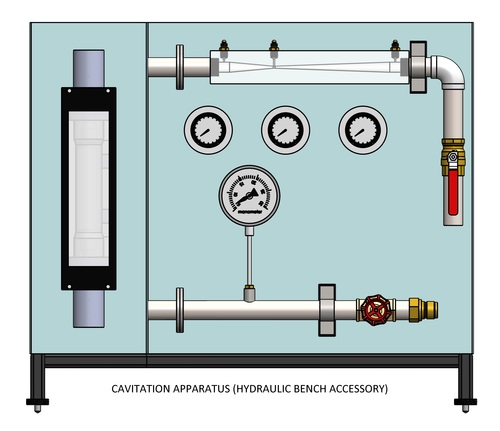
Tell us about your requirement

Price:
Quantity
Select Unit
- 50
- 100
- 200
- 250
- 500
- 1000+
Additional detail
Mobile number
Email

More Products in Fluid Mechanics & Fluid Machinery Category
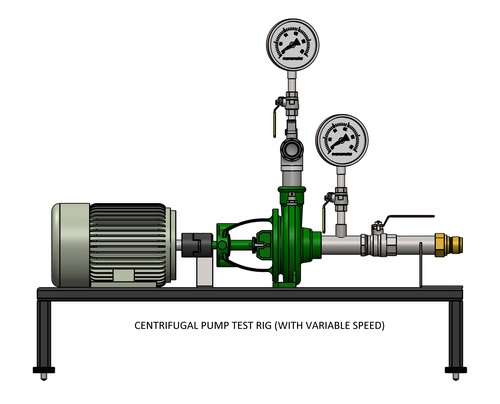
CENTRIFUGAL PUMP TEST RIG (WITH VARIABLE SPEED)
Usage : Lab Testing and Performance Analysis
Feature : Variable Speed Drive, Durable Construction
Type : Test Rig
Voltage : 220V AC
Automation Grade : SemiAutomatic
Display Type : Digital Flow Meter and Manometer
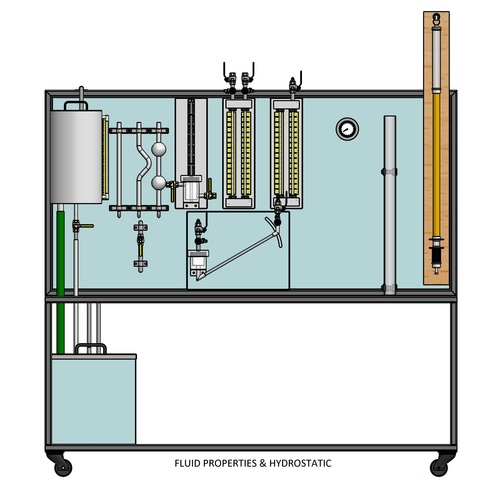
FLUID PROPERTIES AND HYDROSTATIC
Usage : Measurement and demonstration of fluid properties & hydrostatics
Feature : Corrosion resistant, easy to use, robust construction
Type : Educational Laboratory Equipment
Voltage : 230 V
Automation Grade : Manual
Display Type : Analog
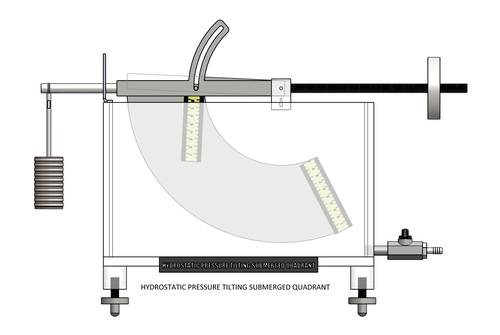
HYDROSTATIC PRESSURE TILTING SUBMERGED QUADRANT
Usage : Physics and fluid mechanics laboratory experiments
Feature : Enables direct observation and measurement of hydrostatic forces with variable angle adjustment
Type : Tilting Submerged Quadrant
Voltage : Not required / Not applicable
Automation Grade : Manual
Display Type : Direct scale reading
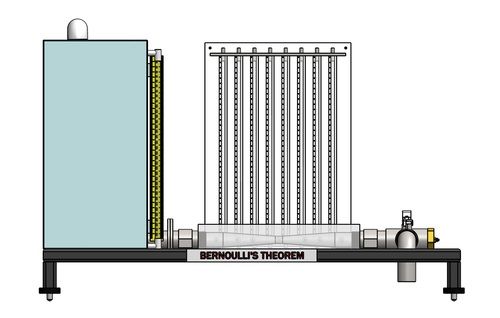
BERNOULL'S THEOREM DEMONSTRATION
Usage : Physics and Fluid Mechanics Laboratory Demonstration
Feature : Visual demonstration of Bernoullis principle, clear acrylic construction, detachable parts for cleaning
Type : Educational Lab Equipment
Voltage : N/A (Not electrically powered)
Automation Grade : Manual
Display Type : Glass Tube/Scale Reading

 Send Inquiry
Our Products
- Engineering Laboratory Equipments
- Heat Transfer Lab.
- Fluid Mechanics Lab.
- Fluid Machinery Lab.
- Theory Of Machines Lab.
- Refrigeration & Air-conditioning Lab.
- Laboratory Scientific Equipments
- Process Control & Instrumentation Lab.
- Chemical Reaction Engineering Lab.
- Mechanical Operation Lab.
- Mass Transfer Lab.
- Momentum Transfer Lab.
- Enviornmental & Bio-engineering Lab.
- Fluid Mechanics & Fluid Machinery
- Mechanical Engineering Lab


96, HSIDC Industrial Estate, Jagadhari Road, Ambala Cantt - 133001, Haryana, India

Mr Manoj Gupta
(Director)
Mobile :08045800460
 Send Inquiry
 Send SMS
 Call Me Free
Developed and Managed by Infocom Network Private Limited.


