
Call us now :08045800460
 Send Inquiry
 Send Inquiry
HYDROSTATIC PRESSURE TILTING SUBMERGED QUADRANT
HYDROSTATIC PRESSURE TILTING SUBMERGED QUADRANT Specification
- Feature
- Enables direct observation and measurement of hydrostatic forces with variable angle adjustment
- Accuracy
- Highly accurate, typically within 1% of measured force
- Power Source
- Manual, non-electric
- Voltage
- Not required / Not applicable
- Frequency
- N/A (Non-electrical)
- Temperature Range
- Ambient to 50C
- Model No
- HS-QT-2024
- Measurement Range
- Up to the full submersion of the quadrant body, depending on tank size
- Capacity
- Designed for laboratory measurements, typically supports up to 5 experiments simultaneously
- Automation Grade
- Manual
- Core Components
- Submerged quadrant body, tilting mechanism, graduated scale, counterweight, water tank
- Equipment Materials
- High-grade Perspex (Acrylic) and stainless steel fittings
- Type
- Tilting Submerged Quadrant
- Usage
- Physics and fluid mechanics laboratory experiments
- Display Type
- Direct scale reading
- Dimension (L*W*H)
- Approx. 450 mm x 300 mm x 400 mm
- Weight
- Approx. 3-5 kg
- Mounting
- Bench-top design with anti-skid base
- Experiment Capability
- Compatible with standard undergraduate practical courses
- Tank Material
- Seamless transparent acrylic for clear visibility
- Maintenance
- Corrosion resistant, easy to clean
- Tilting Angle Range
- 0° to 60° adjustable
- Included Accessories
- Complete set with quadrant, tank, weight, leveling screws, filling cup
- Water Level Adjustment
- Graduated indicators for accurate height measurement
- Application
- Demonstrates principles of hydrostatics and center of pressure
- Calibration
- Supplied pre-calibrated with instruction manual
About HYDROSTATIC PRESSURE TILTING SUBMERGED QUADRANT
To measure moment caused by fluid thrust on wholly or partially submergedplane surface.
1. Technical Details
2. Lever arm withcounter balance and weight hanger with different weight
Educational software will be provided as an option
Installation and Training will be provided
The wholeset-up is well designed and arranged on a rigid structure painted withindustrial PU Paint.
Utilities Required
Water Supply - Initial fill.
Visualize Hydrostatic Principles Easily
The seamless transparent acrylic tank and direct scale readings provide exceptional clarity, allowing students and researchers to observe hydrostatic phenomena and center of pressure shifts dynamically. The anti-skid base ensures safe, stable operation during practical demonstrations.
Flexible Experimental Capability
Tailored for undergraduate courses, this tilting submerged quadrant enables multiple experiments simultaneously. Adjustable angles, precise water level control, and robust stainless steel fittings ensure durability and accuracy throughout repeated laboratory sessions.
Hassle-Free Operation and Maintenance
Supplied pre-calibrated with a clear instruction manual, it offers manual, non-electric operation. Its corrosion-resistant materials and simple structure streamline cleaning, keeping laboratory routines efficient and extending equipment lifespan.
FAQ's of HYDROSTATIC PRESSURE TILTING SUBMERGED QUADRANT:
Q: How does the Hydrostatic Pressure Tilting Submerged Quadrant demonstrate hydrostatic principles and center of pressure?
A: This device allows adjustments of the submerged quadrant's tilting angle (0-60) and water level using graduated indicators. As the quadrant's position and immersion change, users can directly read scale measurements to observe shifts in hydrostatic pressure distribution and the resulting center of pressure.Q: What materials are used in the construction of the apparatus, and what benefits do they offer?
A: The tank is crafted from seamless, transparent acrylic (Perspex) for visibility, with stainless steel fittings for strength and corrosion resistance. These materials facilitate clear observations, maintain measurement accuracy, and simplify long-term maintenance.Q: When should this equipment be used in laboratory settings?
A: The tilting submerged quadrant is used during undergraduate physics and fluid mechanics experiments related to hydrostatics and center of pressure analysis. It is ideal for practical sessions requiring hands-on demonstration and direct measurement.Q: Where is the device typically mounted for experiments?
A: The apparatus features a bench-top design equipped with an anti-skid base, ensuring stability and convenience on laboratory workbenches. This setup minimizes movement and maximizes safety during use.Q: What is the process for setting up and using the quadrant for measurements?
A: Begin by filling the tank with water and adjusting the quadrant's tilt angle using the graduated scale. Set the desired water level, add any required counterweights, and ensure the setup is level using the supplied leveling screws. Follow the instruction manual to carry out precise readings and experiment steps.Q: How does this equipment benefit laboratory instruction and research?
A: It enables direct observation and measurement of hydrostatic forces with highly accurate, manual readings (within 1% error), enhancing learning and research outcomes. The ability to adjust variables and observe real-time changes strengthens students' understanding of fluid mechanics fundamentals.Q: Is the device electrically powered and what are its calibration requirements?
A: The system operates manually and does not require electricity, making it suitable for any laboratory environment. It is supplied pre-calibrated and includes an instruction manual for ongoing routine calibration, ensuring consistently accurate results.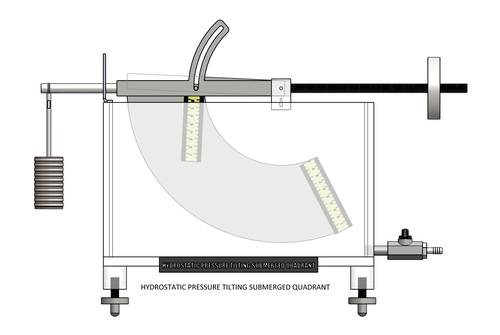
Tell us about your requirement

Price:
Quantity
Select Unit
- 50
- 100
- 200
- 250
- 500
- 1000+
Additional detail
Mobile number
Email

More Products in Fluid Mechanics & Fluid Machinery Category
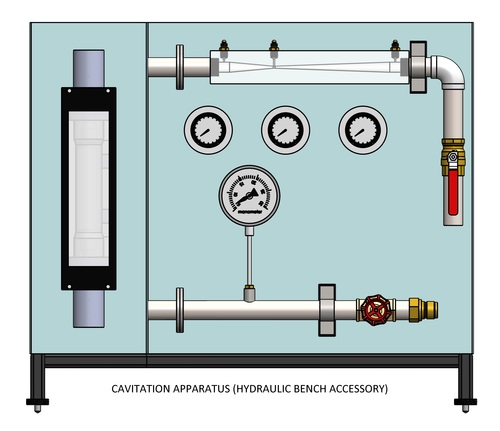
CAVITATION APPARATUS (HYDRAULIC BENCH ACCESSORY)
Feature : Visual Observation of Cavitation, Easy Mounting on Hydraulic Bench
Usage : For studying Cavitation phenomenon in hydraulics laboratories
Weight : Approx. 1015 kg
Type : Hydraulic Bench Accessory
Voltage : 230V AC (via hydraulic bench)
Power Source : Hydraulic Bench Supply
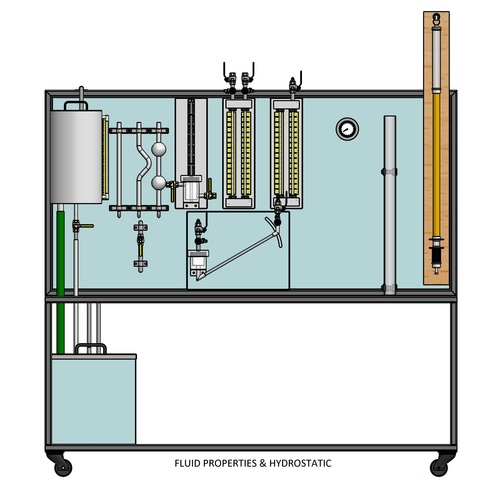
FLUID PROPERTIES AND HYDROSTATIC
Feature : Corrosion resistant, easy to use, robust construction
Usage : Measurement and demonstration of fluid properties & hydrostatics
Weight : 5 kg (approx)
Type : Educational Laboratory Equipment
Voltage : 230 V
Power Source : Manual
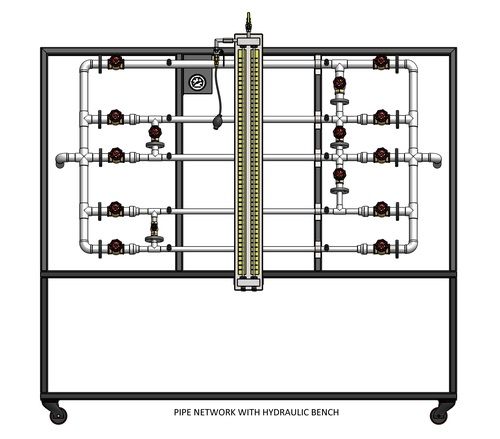
PIPE NETWORK WITH HYDRAULIC BENCH
Feature : Modular Network, Visible Flow, Quick Release Fittings, Interchangeable Pipe Connections
Usage : Educational/Research Demonstration of Hydraulic Network Principles
Weight : Approx. 45 kg
Type : Laboratory Hydraulics Teaching Equipment
Voltage : 220 240 V AC
Power Source : Electric (Single Phase)
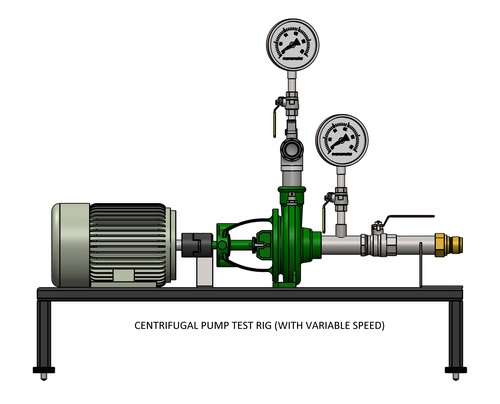
CENTRIFUGAL PUMP TEST RIG (WITH VARIABLE SPEED)
Feature : Variable Speed Drive, Durable Construction
Usage : Lab Testing and Performance Analysis
Weight : Approx. 80 kg
Type : Test Rig
Voltage : 220V AC
Power Source : Electric

 Send Inquiry
Our Products
- Engineering Laboratory Equipments
- Heat Transfer Lab.
- Fluid Mechanics Lab.
- Fluid Machinery Lab.
- Theory Of Machines Lab.
- Refrigeration & Air-conditioning Lab.
- Laboratory Scientific Equipments
- Process Control & Instrumentation Lab.
- Chemical Reaction Engineering Lab.
- Mechanical Operation Lab.
- Mass Transfer Lab.
- Momentum Transfer Lab.
- Enviornmental & Bio-engineering Lab.
- Fluid Mechanics & Fluid Machinery
- Mechanical Engineering Lab


96, HSIDC Industrial Estate, Jagadhari Road, Ambala Cantt - 133001, Haryana, India

Mr Manoj Gupta
(Director)
Mobile :08045800460
 Send Inquiry
 Send SMS
Developed and Managed by Infocom Network Private Limited.


